Brick By Brick: How Lego Rewrote The Rules Of Innovation And Conquered The Global Toy Indu
Sometimes radical yet always applicable, Brick by Brick abounds with real-world lessons for unleashing breakthrough innovation in your organization, using LEGO--which experienced one of the most remarkable business transformations in recent history--as a business model. As LEGO failed to keep pace with the revolutionary changes in kids' lives and began sliding into irrelevance, the company's leaders implemented some of the business world's most widely espoused prescriptions for boosting innovation. Ironically, these changes pushed the iconic toymaker to the brink of bankruptcy, showing that what works in theory can fail spectacularly in the brutally competitive global economy. It took a new LEGO management team--faced with the growing rage for electronic toys, few barriers to entry, and ultra-demanding consumers (ten-year old boys)--to reinvent the innovation rule book and transform LEGO into one of the world's most profitable, fastest-growing companies. Along the way, Brick by Brick reveals how LEGO: - Became truly customer-driven by co-creating with kids as well as its passionate adult fans - Looked beyond products and learned to leverage a full-spectrum approach to innovation - Opened its innovation process by using both the "wisdom of crowds" and the expertise of elite cliques - Discovered uncontested, "blue ocean" markets, even as it thrived in brutally competitive red oceans - Gave its world-class design teams enough space to create and direction to deliver built a culture where profitable innovation flourishes Whether you're a senior executive looking to make your company grow, an entrepreneur building a startup from scratch, or a fan who wants to instill some of that LEGO magic in your career, you'll learn how to build your own innovation advantage, brick by brick.
The Innovator's Method: Bringing The Lean Start-up Into Your Organization
Have you ever come up with an idea for a new product or service but didn & rsquo;t take any action because you thought it would be too risky? Or at work, have you had what you thought could be a big idea for your company & mdash;perhaps changing the way you develop or distribute a product, provide customer service, or hire and train your employees? If you have, but you haven & rsquo;t known how to take the next step, you need to understand what the authors call the innovator & rsquo;s method & mdash;a set of tools emerging from lean start-up, design thinking, and agile software development that are revolutionizing how new ideas are created, refined, and brought to market. To date these tools have helped entrepreneurs, designers, and software developers manage uncertainty & mdash;through cheap and rapid experiments that systematically lower failure rates and risk. But many managers and leaders struggle to apply these powerful tools within their organizations, as they often run counter to traditional managerial thinking and practice. Authors Nathan Furr and Jeff Dyer wrote this book to address that very problem. Following the breakout success of The Innovator & rsquo;s DNA & mdash;which Dyer wrote with Hal Gregersen and bestselling author Clay Christensen to provide a framework for generating ideas & mdash;this book shows how to make those ideas actually happen, to commercialize them for success. Based on their research inside corporations and successful start-ups, Furr and Dyer developed the innovator & rsquo;s method, an end-to-end process for creating, refining, and bringing ideas to market. They show when and how to apply the tools of their method, how to adapt them to your business, and how to answer commonly asked questions about the method itself, including: How do we know if this idea is worth pursuing? Have we found the right solution? What is the best business model for this new offering? This book focuses on the & ldquo;how & rdquo; & mdash;how to test, how to validate, and how to commercialize ideas with the lean, design, and agile techniques successful start-ups use. Whether you & rsquo;re launching a start-up, leading an established one, or simply working to get a new product off the ground in an existing company, this book is for you.
The Wide Lens: What Successful Innovators See That Others Miss
How can great companies do everything right & mdash;identify real customer needs, deliver excellent innovations, beat their competitors to market & mdash;and still fail? The truth is that many companies fail because they focus too intensely on their own innovations, while neglecting the ecosystems on which their success depends. In our increasingly interdependent world, winning requires more than just delivering on your own promises. It means ensuring that a host of partners & mdash;some visible, some hidden & mdash;deliver on their promises, too.
Ron Adner draws on over a decade of research and field testing to reveal the hidden structure of success, from Michelin & rsquo;s failed run-flat tires to Apple & rsquo;s path to market dominance. The Wide Lens offers a powerful new set of frameworks and tools that will multiply your odds of innovation success.
Non-bullshit Innovation: Radical Ideas From The World's Smartest Minds
'Digital transformation' and 'disruptive innovation' used to be empty buzzwords serving to justify pointless box-ticking and absurd corporate posturing. And then a global pandemic suddenly forced every kind of organization to embrace genuine, urgent innovation as a matter of survival. But how can we ensure that the non-bullshit version of innovation delivers economic recovery at this crucial moment? Are there strategies we can all adapt from the world's most creative leaders to innovate effectively in our own lives?David Rowan, founding editor-in-chief of WIRED UK, embarked on a twenty country quest to find out. Packed full of tips for anyone looking for radical ways to adapt and thrive in the digital age, this carefully curated selection of stories will prepare you for whatever the future may bring - because the world will never move this slowly again.___________________________'In this remarkable book, David Rowan tells a story of transformation: how an organisation has found a new way of doing things through innovation driven by ruthless entrepreneurial imagination. What is especially useful is that he does not just stick with small startups, let alone dreamy "inventors". He finds innovation in big companies and even within governments.' - Matt Ridley, The Times
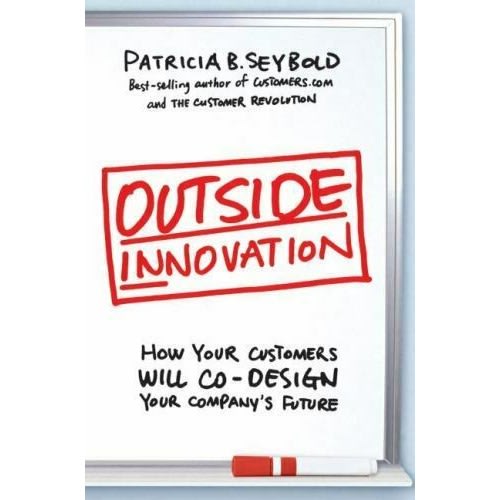
How dynamic businesses of every size can unleash innovation by inviting customers to codesign what they do and make. Reading line: The 8 Roles Customers Play in TrendSetting Companies The refrain is familiar for Patricia Seybold in her journeys as a top technology and management strategist: "I want our company to be acknowledged as the most admired and most customervalued in our industry and to be recognized as the company that has forever changed the way things are done." "How can we become the Google of banking?" "How can we be the eBay of software?" "I want to be the JetBlue of manufacturing." "How can we become the undisputed trendsetter in our industrywith a competitive bar no one can topple?" In Outside Innovation, bestselling author Seybold taps her close relationship with dozens of highinnovation companies to reveal the untold strategy behind the trendsetters and the next HUGE leap forward in customer strategy. Seybold shows that companies that are dominating their category and staying ahead of the pack are collaborating at every level of their business with their customers.
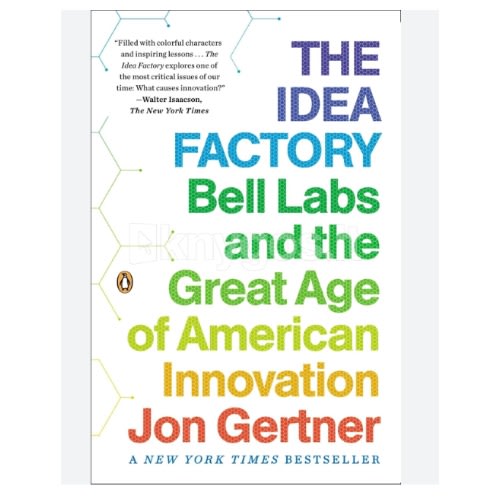
The Idea Factory: Bell Labs And The Great Age Of American Innovation
The definitive history of America & rsquo;s greatest incubator of innovation and the birthplace of some of the 20th century & rsquo;s most influential technologies & ldquo;Filled with colorful characters and inspiring lessons . . . The Idea Factory explores one of the most critical issues of our time: What causes innovation? & rdquo; & mdash;Walter Isaacson, The New York Times Book Review & ldquo;Compelling . . . Gertner's book offers fascinating evidence for those seeking to understand how a society should best invest its research resources. & rdquo; & mdash;The Wall Street JournalFrom its beginnings in the 1920s until its demise in the 1980s, Bell Labs-officially, the research and development wing of AT & T-was the biggest, and arguably the best, laboratory for new ideas in the world. From the transistor to the laser, from digital communications to cellular telephony, it's hard to find an aspect of modern life that hasn't been touched by Bell Labs. In The Idea Factory, Jon Gertner traces the origins of some of the twentieth century's most important inventions and delivers a riveting and heretofore untold chapter of American history. At its heart this is a story about the life and work of a small group of brilliant and eccentric men-Mervin Kelly, Bill Shockley, Claude Shannon, John Pierce, and Bill Baker-who spent their careers at Bell Labs. Today, when the drive to invent has become a mantra, Bell Labs offers us a way to enrich our understanding of the challenges and solutions to technological innovation. Here, after all, was where the foundational ideas on the management of innovation were born.
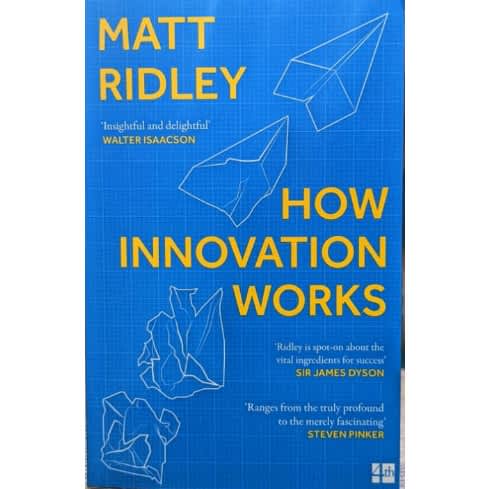
How Innovation Works - And Why It Flourishes In Freedom
Building on his national bestseller The Rational Optimist, Matt Ridley chronicles the history of innovation, and how we need to change our thinking on the subject.
Innovation is the main event of the modern age, the reason we experience both dramatic improvements in our living standards and unsettling changes in our society. Forget short term symptoms like Donald Trump and Brexit, it is innovation itself that explains them and that will itself shape the 21st century for good and ill. Yet innovation remains a mysterious process, poorly understood by policy makers and businessmen, hard to summon into existence to order, yet inevitable and inexorable when it does happen.
Matt Ridley argues in this book that we need to change the way we think about innovation, to see it as an incremental, bottom up, fortuitous process that happens to society as a direct result of the human habit of exchange, rather than an orderly, top-down process developing according to a plan. Innovation is crucially different from invention, because it is the turning of inventions into things of practical and affordable use to people. It speeds up in some sectors and slows down in others. It is always a collective, collaborative phenomenon, not a matter of lonely genius. It is gradual, serendipitous, recombinant, inexorable, contagious, experimental and unpredictable. It happens mainly in just a few parts of the world at any one time. It still cannot be modelled properly by economists, but it can easily be discouraged by politicians. Far from there being too much innovation, we may be on the brink of an innovation famine.
Ridley derives these and other lessons, not with abstract argument, but from telling the lively stories of scores of innovations, how they started and why they succeeded or in some cases failed. He goes back millions of years and leaps forward into the near future. Some of the innovation stories he tells are about steam engines, jet engines, search engines, airships, coffee, potatoes, vaping, vaccines, cuisine, antibiotics, mosquito nets, turbines, propellers, fertiliser, zero, computers, dogs, farming, fire, genetic engineering, gene editing, container shipping, railways, cars, safety rules, wheeled suitcases, mobile phones, corrugated iron, powered flight, chlorinated water, toilets, vacuum cleaners, shale gas, the telegraph, radio, social media, block chain, the sharing economy, artificial intelligence, fake bomb detectors, phantom games consoles, fraudulent blood tests, faddish diets, hyperloop tubes, herbicides, copyright and even a biological innovation life itself.
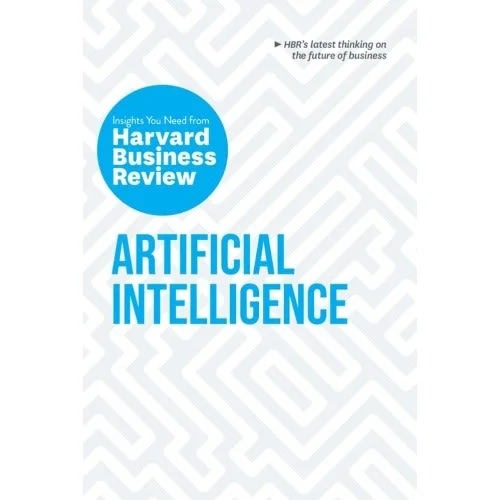
Artificial Intelligence: The Insights You Need From Harvard Business Review
Artificial Intelligence: The Insights You Need from Harvard Business Review (HBR Insights Series)
Companies that don't use AI will soon be obsolete.
From making faster, better decisions to automating rote work to enabling robots to respond to emotions, AI and machine learning are already reshaping business and society. What should you and your company be doing today to ensure that you're poised for success and keeping up with your competitors in the age of AI?
Artificial Intelligence: The Insights You Need from Harvard Business Review brings you today's most essential thinking on AI and explains how to launch the right initiatives at your company to capitalize on the opportunity of the machine intelligence revolution.
Business is changing. Will you adapt or be left behind?Get up to speed and deepen your understanding of the topics that are shaping your company's future with the Insights You Need from Harvard Business Review series. Featuring HBR's smartest thinking on fast-moving issues--blockchain, cybersecurity, AI, and more--each book provides the foundational introduction and practical case studies your organization needs to compete today and collects the best research, interviews, and analysis to get it ready for tomorrow. You can't afford to ignore how these issues will transform the landscape of business and society.
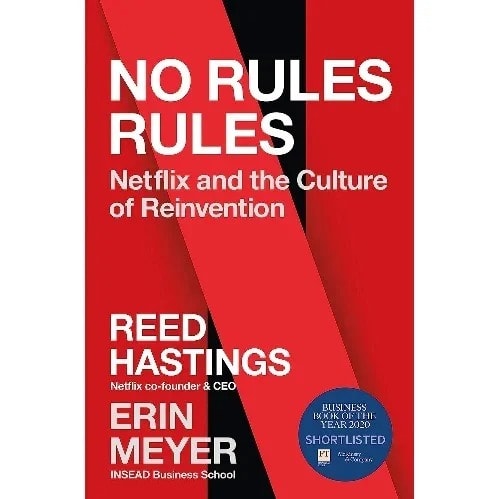
No Rules Rules: Netflix And The Culture Of Reinvention By Reed Hastings And Erin Meyer
No Rules Rules: Netflix and the Culture of Reinvention by Reed Hastings and Erin Meyer
Shortlisted for the 2020 Financial Times & McKinsey Business Book of the YearNetflix cofounder Reed Hastings reveals for the first time the unorthodox culture behind one of the world's most innovative, imaginative, and successful companiesThere has never before been a company like Netflix. It has led nothing short of a revolution in the entertainment industries, generating billions of dollars in annual revenue while capturing the imaginations of hundreds of millions of people in over 190 countries. But to reach these great heights, Netflix, which launched in 1998 as an online DVD rental service, has had to reinvent itself over and over again. This type of unprecedented flexibility would have been impossible without the counterintuitive and radical management principles that cofounder Reed Hastings established from the very beginning. Hastings rejected the conventional wisdom under which other companies operate and defied tradition to instead build a culture focused on freedom and responsibility, one that has allowed Netflix to adapt and innovate as the needs of its members and the world have simultaneously transformed.Hastings set new standards, valuing people over process, emphasizing innovation over efficiency, and giving employees context, not controls. At Netflix, there are no vacation or expense policies. At Netflix, adequate performance gets a generous severance, and hard work is irrel & shy;evant. At Netflix, you don & rsquo;t try to please your boss, you give candid feedback instead. At Netflix, employees don & rsquo;t need approval, and the company pays top of market. When Hastings and his team first devised these unorthodox principles, the implications were unknown and untested. But in just a short period, their methods led to unparalleled speed and boldness, as Netflix quickly became one of the most loved brands in the world.Here for the first time, Hastings and Erin Meyer, bestselling author of The Culture Map and one of the world & rsquo;s most influential business thinkers, dive deep into the controversial ideologies at the heart of the Netflix psyche, which have generated results that are the envy of the business world. Drawing on hundreds of interviews with current and past Netflix employees from around the globe and never-before-told stories of trial and error from Hastings & rsquo;s own career, No Rules Rules is the fascinating and untold account of the philosophy behind one of the world & rsquo;s most innovative, imaginative, and successful companies.
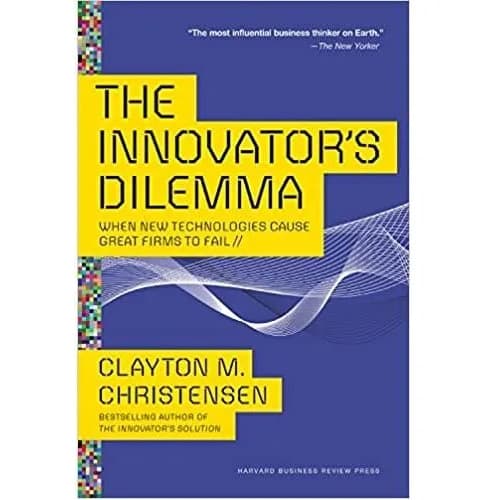
The bestselling classic on disruptive innovation, by renowned author Clayton M. Christensen.
His work is cited by the world & rsquo;s best-known thought leaders, from Steve Jobs to Malcolm Gladwell. In this classic bestseller & mdash;one of the most influential business books of all time & mdash;innovation expert Clayton Christensen shows how even the most outstanding companies can do everything right & mdash;yet still lose market leadership.
Christensen explains why most companies miss out on new waves of innovation. No matter the industry, he says, a successful company with established products will get pushed aside unless managers know how and when to abandon traditional business practices.
Offering both successes and failures from leading companies as a guide, The Innovator & rsquo;s Dilemma gives you a set of rules for capitalizing on the phenomenon of disruptive innovation.
Sharp, cogent, and provocative & mdash;and consistently noted as one of the most valuable business ideas of all time & mdash;The Innovator & rsquo;s Dilemma is the book no manager, leader, or entrepreneur should be without.
"For the first time in human history, we can dare to think of the possibility of eradicating poverty from the face of the earth. To achieve this goal we need the evidence-based, results-oriented approach championed by Raj Kumar's new book."
No Rules Rules: Netflix And The Culture Of Reinvention By Reed Hastings And Erin Meyer
No Rules Rules: Netflix and the Culture of Reinvention by Reed Hastings and Erin Meyer
Shortlisted for the 2020 Financial Times & McKinsey Business Book of the YearNetflix cofounder Reed Hastings reveals for the first time the unorthodox culture behind one of the world's most innovative, imaginative, and successful companiesThere has never before been a company like Netflix. It has led nothing short of a revolution in the entertainment industries, generating billions of dollars in annual revenue while capturing the imaginations of hundreds of millions of people in over 190 countries. But to reach these great heights, Netflix, which launched in 1998 as an online DVD rental service, has had to reinvent itself over and over again. This type of unprecedented flexibility would have been impossible without the counterintuitive and radical management principles that cofounder Reed Hastings established from the very beginning. Hastings rejected the conventional wisdom under which other companies operate and defied tradition to instead build a culture focused on freedom and responsibility, one that has allowed Netflix to adapt and innovate as the needs of its members and the world have simultaneously transformed.Hastings set new standards, valuing people over process, emphasizing innovation over efficiency, and giving employees context, not controls. At Netflix, there are no vacation or expense policies. At Netflix, adequate performance gets a generous severance, and hard work is irrel & shy;evant. At Netflix, you don & rsquo;t try to please your boss, you give candid feedback instead. At Netflix, employees don & rsquo;t need approval, and the company pays top of market. When Hastings and his team first devised these unorthodox principles, the implications were unknown and untested. But in just a short period, their methods led to unparalleled speed and boldness, as Netflix quickly became one of the most loved brands in the world.Here for the first time, Hastings and Erin Meyer, bestselling author of The Culture Map and one of the world & rsquo;s most influential business thinkers, dive deep into the controversial ideologies at the heart of the Netflix psyche, which have generated results that are the envy of the business world. Drawing on hundreds of interviews with current and past Netflix employees from around the globe and never-before-told stories of trial and error from Hastings & rsquo;s own career, No Rules Rules is the fascinating and untold account of the philosophy behind one of the world & rsquo;s most innovative, imaginative, and successful companies.