The Corporate Environment By David Farnham Second Edition 1995
Today's business environment requires that managers prossess a wide range of knowledge,skill and competencies.The Professional Management Foundation Programme was specifically designed to help them meet these needs.This series of practical,introductory texts is ideally suited to students on the Programme,yet equally useful for anyone wishing to enhance their understanding of modern management methods.
A WALL STREET JOURNAL BESTSELLER!
"You can't really know anything if you just remember isolated facts. If the facts don't hang together on a latticework of theory, you don't have them in a usable form.You've got to have models in your head."- Charlie Munger, investor, vice chairman of Berkshire Hathaway
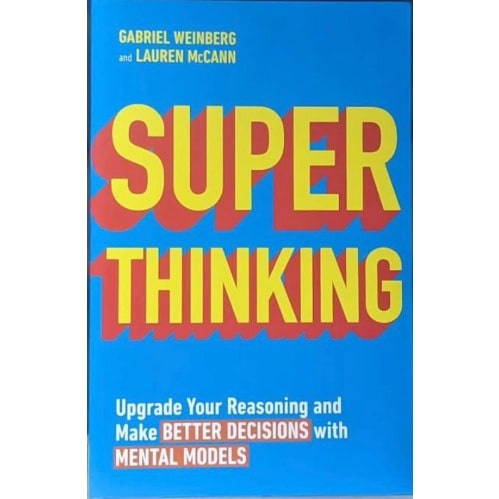
The world's greatest problem-solvers, forecasters, and decision-makers all rely on a set of frameworks and shortcuts that help them cut through complexity and separate good ideas from bad ones. They're called mental models, and you can find them in dense textbooks on psychology, physics, economics, and more.Or, you can just read Super Thinking, a fun, illustrated guide to every mental model you could possibly need. How can mental models help you? Well, here are just a few examples... & bull; If you've ever been overwhelmed by a to-do list that's grown too long, maybe you need the Eisenhower Decision Matrix to help you prioritize. & bull; Use the 5 Whys model to better understand people's motivations or get to the root cause of a problem. & bull; Before concluding that your colleague who messes up your projects is out to sabotage you, consider Hanlon's Razor for an alternative explanation. & bull; Ever sat through a bad movie just because you paid a lot for the ticket? You might be falling prey to Sunk Cost Fallacy. & bull; Set up Forcing Functions, like standing meeting or deadlines, to help grease the wheels for changes you want to occur.So, the next time you find yourself faced with a difficult decision or just trying to understand a complex situation, let Super Thinking upgrade your brain with mental models.
It's Not The How Or The What But The Who - Succeed By Surrounding Yourself With The Best
Succeed by mastering the art of the whoWhy surround yourself with the best? Because it matters in all aspects of life.In fact, in professional environments, getting people right what global leadership authority Claudio Fern & aacute;ndez Ar & aacute;oz calls the art of great who & rsquo; decisions & rdquo; marks the difference between success and failure. To thrive, you need to identify those with the highest potential, get them in your corner and on your team, and help them grow. Yet surprisingly very few of us are able to meet that challenge.This series of short and engaging essays outlines the obstacles to great who & rdquo; decisions and offers solutions to address them in a systematic way. Drawing from several decades of experience in global executive search and talent development, as well as the latest management and psychology research, Fern & aacute;ndez Ar & aacute;oz offers wisdom and practical advice to improve the choices we make about employees and mentors, business partners and friends, top corporate leaders and even elected officials.The personal stories and cutting-edge studies described in the book will help you understand both your own failings and the external forces commonly at play in staffing decisions. The author shares concrete recommendations on how to select the best people, bring out their strengths, foster collective greatness in the groups you & rsquo;ve assembled, and create not only better organizations but also a better society.Starting with the cases of Amazon pioneer Jeff Bezos and Brazilian tycoon Roger Agnelli and continuing with individual and corporate examples from around the world, Fern & aacute;ndez Ar & aacute;oz paints a vivid picture of what great who & rdquo; decisions look like and presents a fresh and commanding argument about why they matter more than ever today
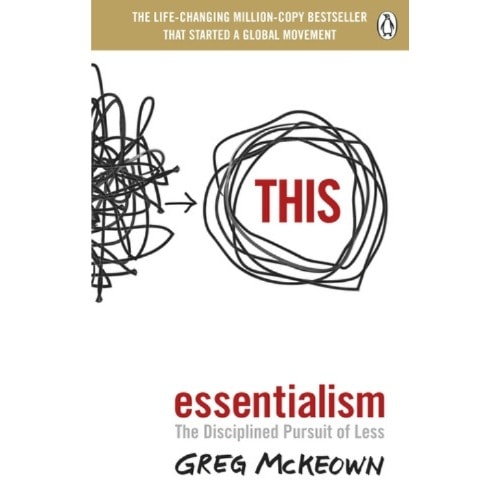
Essentialism: The Disciplined Pursuit Of Less Paperback
Have you ever found yourself struggling with information overload?
Have you ever felt both overworked and underutilised?
Do you ever feel busy but not productive?
If you answered yes to any of these, the way out is to become an Essentialist.
In Essentialism, Greg McKeown, CEO of a Leadership and Strategy agency in Silicon Valley who has run courses at Apple, Google and Facebook, shows you how to achieve what he calls the disciplined pursuit of less. Being an Essentialist is about a disciplined way of thinking. It means challenging the core assumption of & lsquo;We can have it all & rsquo; and & lsquo;I have to do everything & rsquo; and replacing it with the pursuit of & lsquo;the right thing, in the right way, at the right time'.
By applying a more selective criteria for what is essential, the pursuit of less allows us to regain control of our own choices so we can channel our time, energy and effort into making the highest possible contribution toward the goals and activities that matter.
Using the experience and insight of working with the leaders of the most innovative companies and organisations in the world, McKeown shows you how to put Essentialism into practice in your own life, so you too can achieve something great.
Language & rlm; : & lrm; EnglishPaperback & rlm; : & lrm; 288 pagesISBN-10 & rlm; : & lrm; 9780753555163ISBN-13 & rlm; : & lrm; 978-0753555163Dimensions & rlm; : & lrm; 13.4 x 2.1 x 21.5 cm
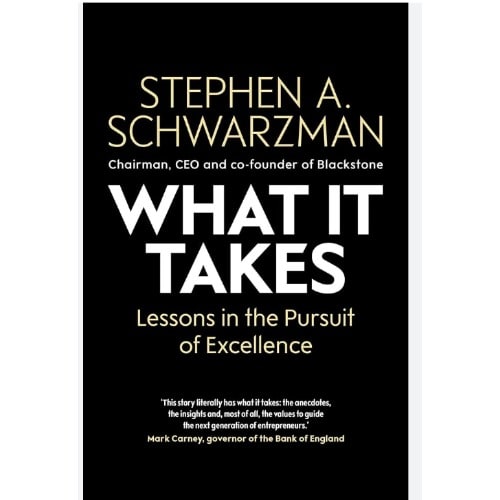
What It Takes: Lessons In The Pursuit Of Excellence
NEW YORK TIMES BESTSELLERFrom Blackstone chairman, CEO, and co-founder Stephen A. Schwarzman, a long-awaited book that uses impactful episodes from Schwarzman's life to show readers how to build, transform, and lead thriving organizations. Whether you are a student, entrepreneur, philanthropist, executive, or simply someone looking for ways to maximize your potential, the same lessons apply.People know who Stephen Schwarzman is & mdash;at least they think they do. He & rsquo;s the man who took $400,000 and co-founded Blackstone, the investment firm that manages over $500 billion (as of January 2019). He & rsquo;s the CEO whose views are sought by heads of state. He & rsquo;s the billionaire philanthropist who founded Schwarzman Scholars, this century & rsquo;s version of the Rhodes Scholarship, in China. But behind these achievements is a man who has spent his life learning and reflecting on what it takes to achieve excellence, make an impact, and live a life of consequence.Folding handkerchiefs in his father & rsquo;s linen shop, Schwarzman dreamed of a larger life, filled with purpose and adventure. His grades and athleticism got him into Yale. After starting his career in finance with a short stint at a financial firm called DLJ, Schwarzman began working at Lehman Brothers where he ascended to run the mergers and acquisitions practice. He eventually partnered with his mentor and friend Pete Peterson to found Blackstone, vowing to create a new and different kind of financial institution.Building Blackstone into the leading global financial institution it is today didn & rsquo;t come easy. Schwarzman focused intensely on culture, hiring great talent, and establishing processes that allow the firm to systematically analyze and evaluate risk. Schwarzman & rsquo;s simple mantra & ldquo;don & rsquo;t lose money & rdquo; has helped Blackstone become a leading private equity and real estate investor, and manager of alternative assets for institutional investors globally. Both he and the firm are known for the rigor of their investment process, their innovative approach to deal making, the diversification of their business lines, and a conviction to be the best at everything they do.Schwarzman is also an active philanthropist, having given away more than a billion dollars. In philanthropy, as in business, he is drawn to situations where his capital and energy can be applied to drive transformative solutions and change paradigms, notably in education. He uses the skills learned over a lifetime in finance to design, establish, and support impactful and innovative organizations and initiatives. His gifts have ranged from creating a new College of Computing at MIT for the study of artificial intelligence, to establishing a first-of-its-kind student and performing arts center at Yale, to enabling the renovation of the iconic New York Public Library, to founding the Schwarzman Scholars fellowship program at Tsinghua University in Beijing & mdash;the single largest philanthropic effort in China & rsquo;s history from international donors.Schwarzman & rsquo;s story is an empowering, entertaining, and informative guide for anyone striving for greater personal impact. From deal making to investing, leadership to entrepreneurship, philanthropy to diplomacy, Schwarzman has lessons for how to think about ambition and scale, risk and opportunities, and how to achieve success through the relentless pursuit of excellence. Schwarzman not only offers readers a thoughtful reflection on all his own experiences, but in doing so provides a practical blueprint for success.
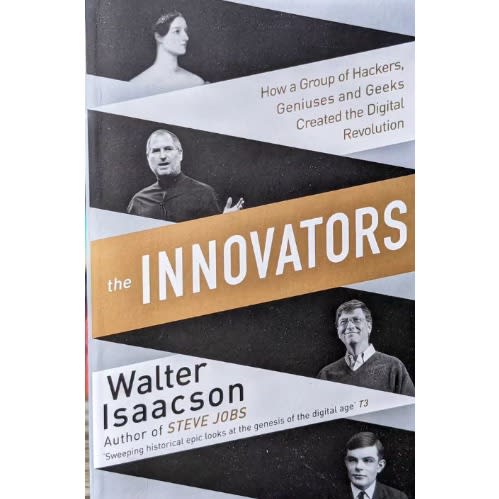
The Innovators: How A Group Of Hackers, Geniuses, And Geeks Created The Digital Revolution
Following his blockbuster biography of Steve Jobs, Walter Isaacson & rsquo;s New York Times bestselling and critically acclaimed The Innovators is a & ldquo;riveting, propulsive, and at times deeply moving & rdquo; (The Atlantic) story of the people who created the computer and the internet.What were the talents that allowed certain inventors and entrepreneurs to turn their visionary ideas into disruptive realities? What led to their creative leaps? Why did some succeed and others fail?The Innovators is a masterly saga of collaborative genius destined to be the standard history of the digital revolution & mdash;and an indispensable guide to how innovation really happens. Isaacson begins the adventure with Ada Lovelace, Lord Byron & rsquo;s daughter, who pioneered computer programming in the 1840s. He explores the fascinating personalities that created our current digital revolution, such as Vannevar Bush, Alan Turing, John von Neumann, J.C.R. Licklider, Doug Engelbart, Robert Noyce, Bill Gates, Steve Wozniak, Steve Jobs, Tim Berners-Lee, and Larry Page.This is the story of how their minds worked and what made them so inventive. It & rsquo;s also a narrative of how their ability to collaborate and master the art of teamwork made them even more creative. For an era that seeks to foster innovation, creativity, and teamwork, The Innovators is & ldquo;a sweeping and surprisingly tenderhearted history of the digital age & rdquo; (The New York Times).
Finish What You Start - The Art Of Following Through - Taking Action - Executing & Self-disc
Practical tactics to grow your willpower, stop procrastination, focus like a laser, and achieve whatever you set your mind to.Following through and finishing what you start- more valuable skills than you realize. They are a combination of traits that enables you to create the life you want - without having to compromise or wait. The alternative is a status quo that you & rsquo;re stuck in.Is your life a series of unfinished tasks and intentions? That stops now.Finish What You Start is a unique deep dive into the psychology and science of accomplishment, productivity, and getting things done. It takes a thorough look why we are sometimes stuck, and gives detailed, step by step solutions you can start using today. Every phase of finishing and following through is covered, and even productivity pros will be able to learn something new.Above all else, this is a guide to understanding your brain and instincts better for optimal results.Channel massive productivity and mental toughness.Peter Hollins has studied psychology and peak human performance for over a dozen years and is a bestselling author. He has worked with dozens of individuals to unlock their potential and path towards success. His writing draws on his academic, coaching, and research experience.Resist distractions, de-motivation, temptations, laziness, and excuses. & bull;The surprising motivations that push us past obstacles. & bull;How daily rules and a manifesto can help you achieve. & bull;Valuable and insightful mindsets to view productivity from entirely new lights.Seize self-control and finally accomplish your big and small goals. & bull;The science and tactics to beating procrastination easily. & bull;Focus and willpower pitfalls you are probably committing at this very moment. & bull;How to beat distractions, remain focused, stay on task, and get to what matters - consistently.Transform your life through productive habits and avoiding mental traps.You only have 24 hours in the day, but so does everyone else. You can be among those who make the most and accomplish exactly what they want. The ability to finish and follow through parallels your ability to be happy and fulfilled. Your life is in your hands, so make the most of it!Finish what you started by reading this far and click the BUY NOW button at the top of this page!
Lead From The Future - How To Turn Visionary Thinking Into Breakthrough Growth
Gold Medal Winner for Best Leadership Book in the 2021 Axiom Business Book Awards
Named one of the "Top Ten Technology Books Of 2020" & mdash; Forbes
Named one of the "10 Best New Business Books of 2020" by Inc. magazine
"Johnson and Suskewicz have raised a battle cry for the kind of leadership we need in these uncertain times." -- Sandi Peterson, Member, Board of Directors, Microsoft
We all know a visionary leader when we see one. They're bold and prophetic and at the same time pragmatic. They don't just promote change--they drive it, while inspiring and mobilizing others to do the same. Visionaries like Steve Jobs and Jeff Bezos possess a host of innate qualities that make them extraordinary, but what truly sets them apart is their ability to turn vision into action.
In Lead from the Future, Innosight's Mark W. Johnson and Josh Suskewicz introduce a new way of thinking and managing, called "future-back," that enables any manager to become a practical visionary. Addressing the many barriers to change that exist in established organizations, they present a systematic approach to overcoming them that includes:
The principles and mind-set that allow leadership teams to look beyond typical short-term planning horizons
A method for turning emerging challenges into the growth opportunities that can define an organization's future
A step-by-step approach for translating a vision into a strategic plan that teams can align around and commit to
Ways to ensure that visionary thinking becomes a repeatable organizational capability
As practical as it is inspiring, Lead from the Future is the guide you and your team need to develop a vision and translate it into transformative growth.
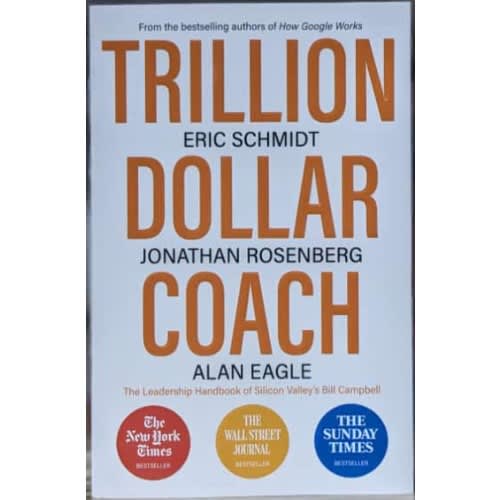
Trillion Dollar Coach: The Leadership Playbook Of Silicon Valley's Bill Campbell
#1 Wall Street Journal BestsellerNew York Times BestsellerUSA Today Bestseller
The team behind How Google Works returns with management lessons from legendary coach and business executive, Bill Campbell, whose mentoring of some of our most successful modern entrepreneurs has helped create well over a trillion dollars in market value.Bill Campbell played an instrumental role in the growth of several prominent companies, such as Google, Apple, and Intuit, fostering deep relationships with Silicon Valley visionaries, including Steve Jobs, Larry Page, and Eric Schmidt. In addition, this business genius mentored dozens of other important leaders on both coasts, from entrepreneurs to venture capitalists to educators to football players, leaving behind a legacy of growing companies, successful people, respect, friendship, and love after his death in 2016.
Leaders at Google for over a decade, Eric Schmidt, Jonathan Rosenberg, and Alan Eagle experienced firsthand how the man fondly known as Coach Bill built trusting relationships, fostered personal growth & mdash;even in those at the pinnacle of their careers & mdash;inspired courage, and identified and resolved simmering tensions that inevitably arise in fast-moving environments. To honor their mentor and inspire and teach future generations, they have codified his wisdom in this essential guide.
Based on interviews with over eighty people who knew and loved Bill Campbell, Trillion Dollar Coach explains the Coach & rsquo;s principles and illustrates them with stories from the many great people and companies with which he worked. The result is a blueprint for forward-thinking business leaders and managers that will help them create higher performing and faster moving cultures, teams, and companies.
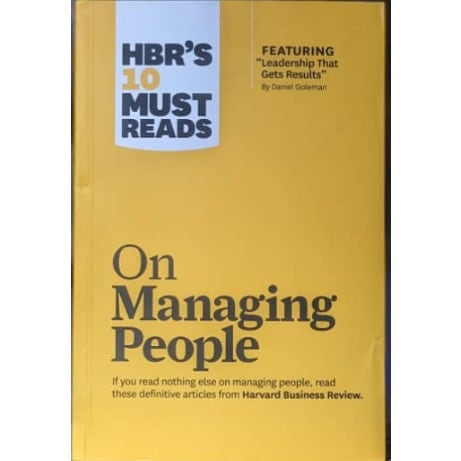
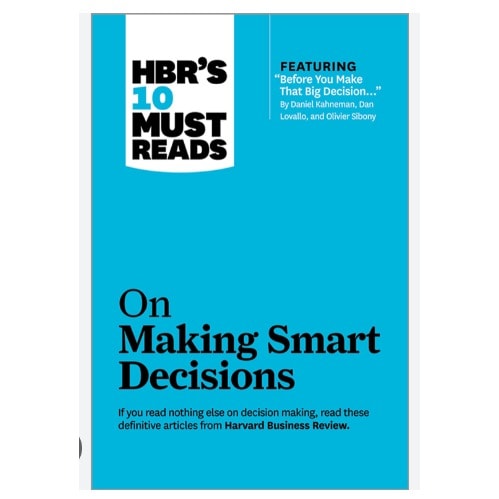
Learn why bad decisions happen to good managers & mdash;and how to make better ones.
If you read nothing else on decision making, read these 10 articles. We & rsquo;ve combed through hundreds of articles in the Harvard Business Review archive and selected the most important ones to help you and your organization make better choices and avoid common traps.
Leading experts such as Ram Charan, Michael Mankins, and Thomas Davenport provide the insights and advice you need to:
Make bold decisions that challenge the status quo
Support your decisions with diverse data
Evaluate risks and benefits with equal rigor
Check for faulty cause-and-effect reasoning
Test your decisions with experiments
Foster and address constructive criticism
Defeat indecisiveness with clear accountability
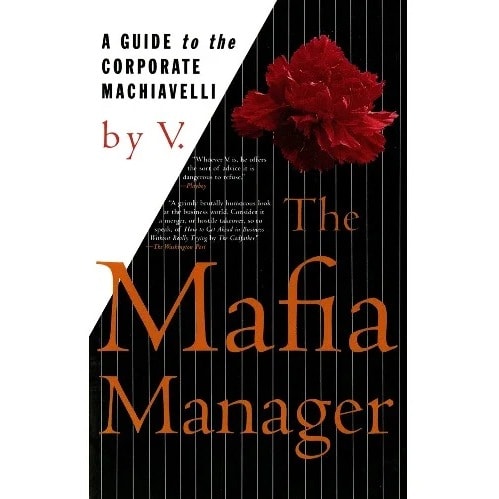
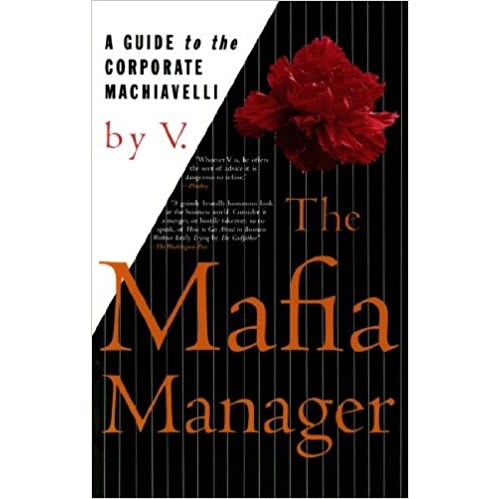
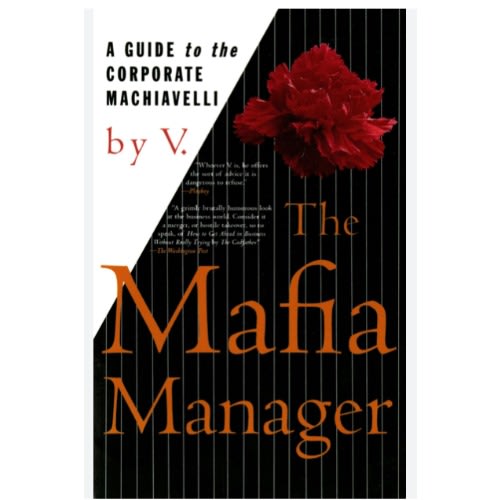
The Mafia Manager - A Guide To The Corporate Machiavelli
The world's oldest and best-organized conglomerate now reveals management techniques everyone can use. Unlike other guides to business, The Mafia Manager shuns theoretical verbiage to present the philosophy of leadership that founded and captained "The Silent Empire" through centuries of expansion and success. Some sample pearls of wisdom:-"Be sure you understand what your boss has ordered before you act on his command. What if you whack the wrong guy, or bomb the wrong joint... Learn the art of asking questions."-"Keep your friends close, but keep your enemies closer."-"Don't become involved in any office political battle without first asking yourself, 'What's in it for me?' and then 'What's in it for them?'"-"If you must lie, be brief."
The Third Opinion - How Successful Leaders Use Outside Insight To Create Superior Results
The Six Steps For Exponential Thinking
One: Understand the mental models that guide your thinking
What are the mental models that govern your thinking? Your mental models are made up of assumptions about how your business works. They & rsquo;re also made up of the fundamental assumptions you have about the world and your place in it.
Our mental models deeply impact how we make sense of things and how we choose to act. They develop from individual experience and from our cultural and intellectual heritages. The starting point for exponential thinking is to develop an awareness of our mental models and those of others.
Two: Develop your ability to discern patterns.
Our ability to see and recognize patterns is one of the fundamental human sense-making capabilities. As leaders, we need to look for patterns constantly and practice spotting them in different situations and in a variety of contexts.
Three: Check and recheck for hidden assumptions.
Much of what we do each day is guided by assumptions we hold. A key part of exponential thinking is unearthing and examining our own assumptions and how they affect our thinking. Many tools can help you unearth assumptions about your business. For example, Six Sigma is a method that enables you to increase operational results and quality in sustainable ways. Part of the power is that it uses a structured approach to move from operational conjecture to measurable fact, revealing hidden assumptions. There are a variety of business building tools aiming to do the same thing in most areas of business operations.
Four: Create varied scenarios of the future.
Exponential thinkers consider mental models, patterns, and assumptions, then use them to develop a portfolio of scenarios for the future. The exponential thinker has the ability and judgment to create multiple views of the future, compare one to another, determine their relative probabilities, and commit to a course of action that allows for the ability to switch if and when needed.
Five: Look for ways to broaden your line of sight.
Everyone is looking for ways to get more value from less. To develop the necessary habit of mind for successful leadership today means you have to think very carefully about how you get your information, its sources, and its sources & rsquo; sources. Information comes at us fast and furious. As a result, we don & rsquo;t have time to parse the data and consider how reliable it may be. We risk making decisions on outdated, incomplete or distorted information.
Most information that reaches us has been filtered for perspective and spin. When they become too isolated, leaders lose their awareness of the strategies, norms, beliefs and agendas of anyone besides their own teams. That isolation can have a high cost.