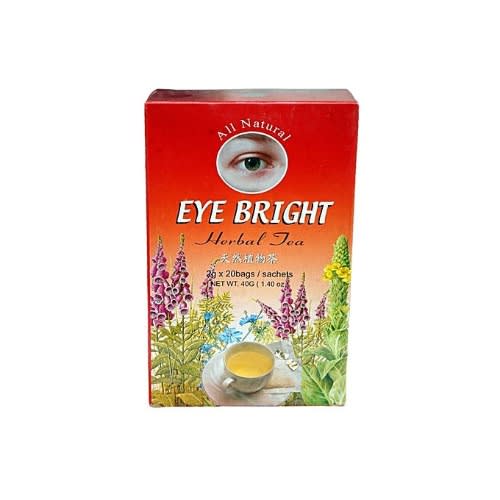
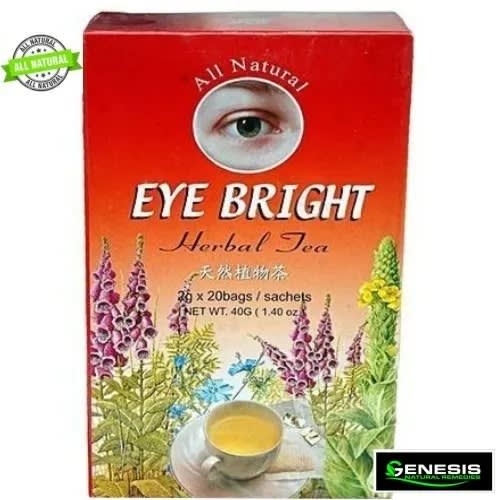
Jianxi All Natural Eye Bright Herbal Tea - 20 Satchets
Naturally prepared to clear blurred vision
Clears dim sight
Clears redness of the eyes
Brightens the eyes
Helps against most visual disturbances
Constant use will benefit the liver, nourish the kidneys & refresh the heart
All Natural Eye Bright Herbal Tea is a natural remedy for most eye problems. It has a long history in herbal medicine and contains well-crafted herbs naturally prepared to clear blurred vision, dim sight, swellings in the eyes, redness of the eyes and most visual disturbances. In addition, constant use will benefit the liver, nourish the kidneys and refresh the heart.
It detoxifies the body of toxins and free radicals, repairs the optic nerves that might have been damaged by free radicals and long use of eyeglasses. Whether suffering from short-sightedness (myopia), long-sightedness (hypermyopia), glaucoma, eye inflammation, conjunctivitis, etc., Eye Bright herbal tea will be of tremendous benefit to you.Legal Disclaimer: Actual product packaging and materials may contain more and/or different information than what is displayed on our website. Therefore, we recommend you always read labels, warnings, and directions before using or consuming a product. Please contact the manufacturer or seller for additional information about a product. Content on rehmie.com.ng is for reference purposes and is not intended to substitute for advice given by a physician, pharmacist, or other licensed healthcare professional. You should not use this information to self-diagnose or treat a health problem or disease. Contact your healthcare provider immediately if you suspect a medical problem. Information and statements regarding dietary supplements have not been evaluated by the National Agency For Food and Drug Administration and Control (NAFDAC) and are not intended to diagnose, treat, cure, or prevent any disease or health condition. rehmie.com.ng assumes no liability for inaccuracies or misstatements about products.
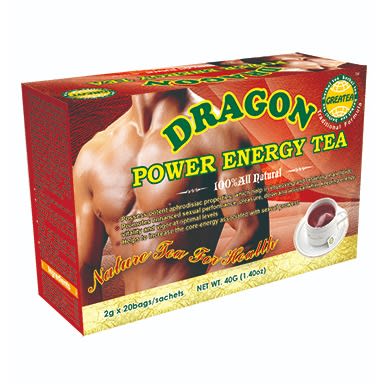
Dragon power energy tea has natural underlying potency that helps in reducing stress on internal organs. Regular intake will help overcome low libido and male impotency. The effective ingredients present in this herbal supplement will help in rejuvenating and healing individual cells in the body resulting in the cells gaining renewed vitality and energy.Dragon Power Energy Tea is used for improving men’s sexuality. It results in a very turgid and long lasting erection and cures quick or premature ejaculation.
HOW TO USE
It is to be taken twice daily: one in the morning and one at night.
It is used like a normal tea only that sugar or milk will not be added.
It is not bitter.
Boil the tea with a glass cup of water or boil a VERY HOT water, pour it into a tea cup and put one sachet. Allow it to distill for about 3 minutes and cool down before drinking.
You can take it before or after meals. However, there should be a gap of 30 minutes or more between it and meals.
Legal Disclaimer- The use and accessibility of our products, services, and platforms are intended for individuals who are 18 years and above. Therefore, minors must obtain the consent and supervision of parent(s) or legal guardian before accessing or using our platforms/products. By accessing or using our products, services, and platforms, you represent and warrant that you have obtained such consent and supervision. Please note that rehmie.com.ng shall not be responsible or liable, directly or indirectly, for any damage or loss caused or alleged to be caused by or in connection with the use of or reliance on any such content, goods, or services available on or through our websites or services.
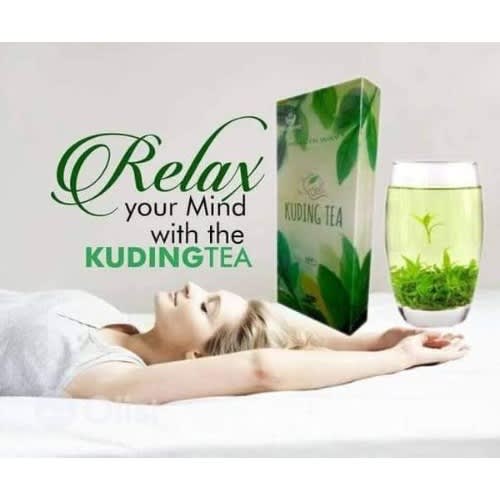
HEALTHWAY KUDING TEAkuding is a plant that grows in China. History has it on record that Kuding as a medical herb has been used by the Chinese for more than 2000yrs.As a folk medicine, Kuding chai is known for the following saying ‘jiang sangao’ which literally means ‘reduce three high’. This refers to the fact that this herb can help reduce high blood sugar, high blood pressure and high cholesterol.
Ingredients
Dark Tea – It can help to reduce blood pressure, reduce blood fatness, control blood sugar, etc. It helps with diuretic detoxification, anti-radiation and diminishes inflammation.
Lotus Leaf – It reduces heart, spleen, and lung fire, clears heat, refreshes the mind, promotes diuresis, and lowers blood pressure.
Big Leaf Holly - It is used for coughs, digestive disorders, water retention, cheat congestion, empties and cleanses bowels, stimulates the heart, increases urine flow, promotes blood circulation, used in treating heart disease, dizziness and high blood pressure.
Nutritional ValueKuding Tea is rich in antioxidants. It contains beneficial components such as amino acids, polyphenols, flavonoids, zinc selenium, and several vitamins such as C, D, and E.
Benefits of Kuding Tea
Losing weight and slimming.
Reduces high levels of cholesterol, blood pressure, and sugar.
Preventing cancer.
Helps fight against dizziness, tinnitus, headache, and excessive heat.
Coordinates the intestines and stomach.
Its anti-bacterial properties make it an effective herb against acne and bad breath
Note
It is not suitable for pregnant women, nursing mothers, and people sensitive to caffeine.
It should be avoided by people with low blood pressure.
It should be avoided one month before or after surgery.
Legal Disclaimer: Actual product packaging and materials may contain more and/or different information than what is displayed on our website. Therefore, we recommend that you always read labels, warnings, and directions before using or consuming a product. For additional information about a product, please contact the manufacturer or the seller. Content on rehmie.com.ng is for reference purposes and is not intended to substitute for advice given by a physician, pharmacist, or other licensed health-care professional. You should not use this information as self-diagnosis or for treating a health problem or disease. Contact your health-care provider immediately if you suspect that you have a medical problem. Information and statements regarding dietary supplements have not been evaluated by the National Agency For Food and Drug Administration and Control (NAFDAC) and are not intended to diagnose, treat, cure, or prevent any disease or health condition. rehmie.com.ng assumes no liability for inaccuracies or misstatements about products.
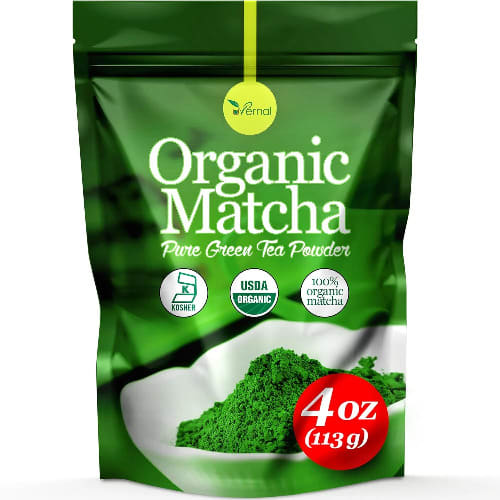
For almost a thousand years matcha green tea powder has been produced in Japan. It was first imported from China, where grounding tea leaves into powder had been tradition for many centuries before. At first, matcha was a drink favored by Buddhist monks in their monasteries, offering relaxation and energy during the many hours of meditation. Late on higher echelons of society desired the unique taste of matcha powder as well. Even if you are no fan of green tea flavor, these benefits will be more than enough to convince you to give matcha a go. You just have to look at Japanese people and you realize that they are, on average, leaner, healthier and younger looking than your average westerner. Matcha powder is part of the Japanese diet and one reason for their excellent health and youthful looks. The natural occurring amino acids in matcha can boost your energy levels for hours. Drinking matcha is a better option than caffeinated drinks, since you don’t get all the side-effects of caffeine withdrawal when you drink it.
Legal Disclaimer: Actual product packaging and materials may contain more and/or different information than what is displayed on our website. Therefore, we recommend that you always read labels, warnings, and directions before using or consuming a product. For additional information about a product, please contact the manufacturer or the seller. Content on rehmie.com.ng is for reference purposes and is not intended to substitute for advice given by a physician, pharmacist, or other licensed health-care professional. You should not use this information as self-diagnosis or for treating a health problem or disease. Contact your health-care provider immediately if you suspect that you have a medical problem. Information and statements regarding dietary supplements have not been evaluated by the National Agency For Food and Drug Administration and Control (NAFDAC) and are not intended to diagnose, treat, cure, or prevent any disease or health condition. rehmie.com.ng assumes no liability for inaccuracies or misstatements about products.
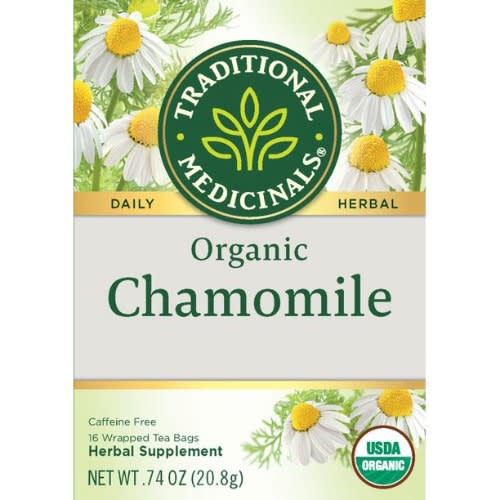
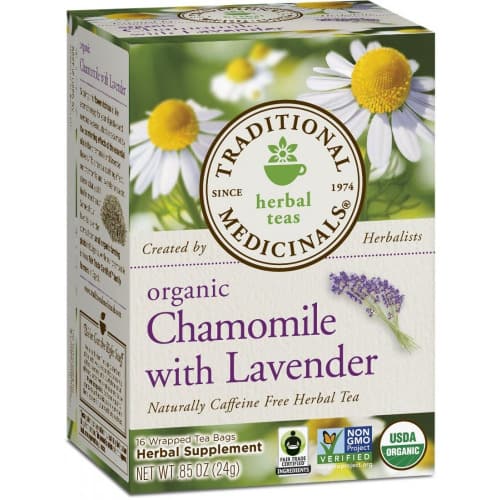
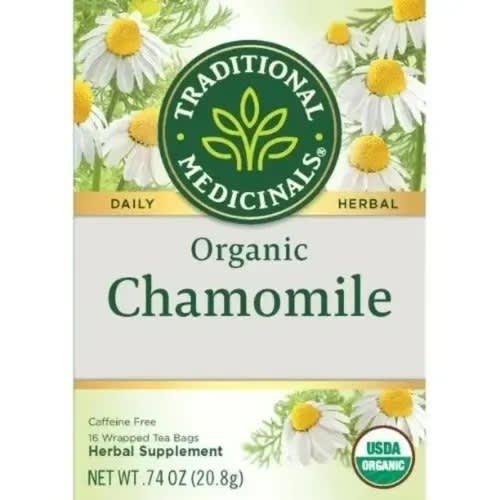
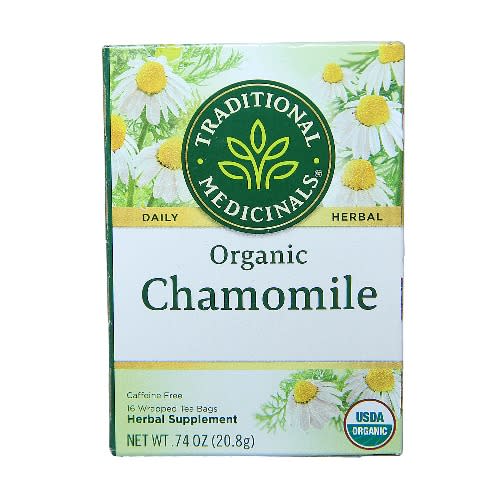
Chamomile is one of the most beloved plants in herbalism and a reliable household staple. For this tea, we use chamomile’s prized flowers—the most potent part of the plant due to its high essential oil content.
From field to cup, we make sure our teas delivers the benefits of these amazing plants. To deliver consistent high quality teas, we source organically farmed or wild collected herbs from ethical trading partnerships, seeking out medicinal grade plants. Only a small fraction of the world's herb supply meets our high quality standards.
Calms your nerves and supports healthy digestion.
Legal Disclaimer: Actual product packaging and materials may contain more and/or different information than what is displayed on our website. Therefore, we recommend that you always read labels, warnings, and directions before using or consuming a product. For additional information about a product, please contact the manufacturer or the seller. Content on rehmie.com.ng is for reference purposes and is not intended to substitute for advice given by a physician, pharmacist, or other licensed health-care professional. You should not use this information as self-diagnosis or for treating a health problem or disease. Contact your health-care provider immediately if you suspect that you have a medical problem. Information and statements regarding dietary supplements have not been evaluated by the National Agency For Food and Drug Administration and Control (NAFDAC) and are not intended to diagnose, treat, cure, or prevent any disease or health condition. rehmie.com.ng assumes no liability for inaccuracies or misstatements about products.
Herbal Power
Calms your nerves and supports healthy digestion
Taste
Fragrant and floral with honey notes
Plant Story
Chamomile is one of the most beloved plants in herbalism and a reliable household staple. For this tea, we use chamomile's prized flowers - the most potent part of the plant due to its high essential oil content. We source some of our favorite flowers sustainably from Egypt's fertile Nile Valley.
Herbs That Work
From field to cup, we make sure out teas deliver the benefits of these amazing plants. To deliver consistent high quality teas, we source organically farmed or organically wild-collected herbs from ethical trading partnerships, seeking out medicinal-grade plants. Only a small fraction of the world's herb supply meets our high quality standards.
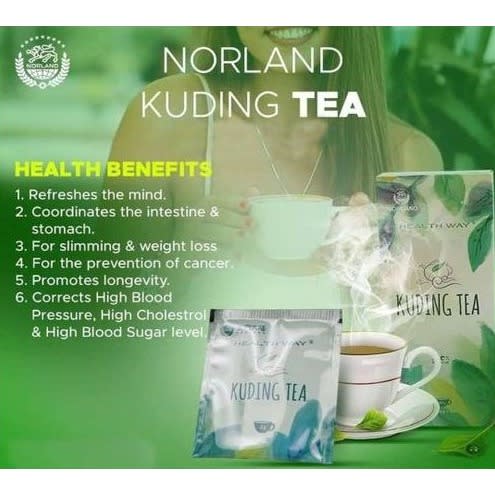
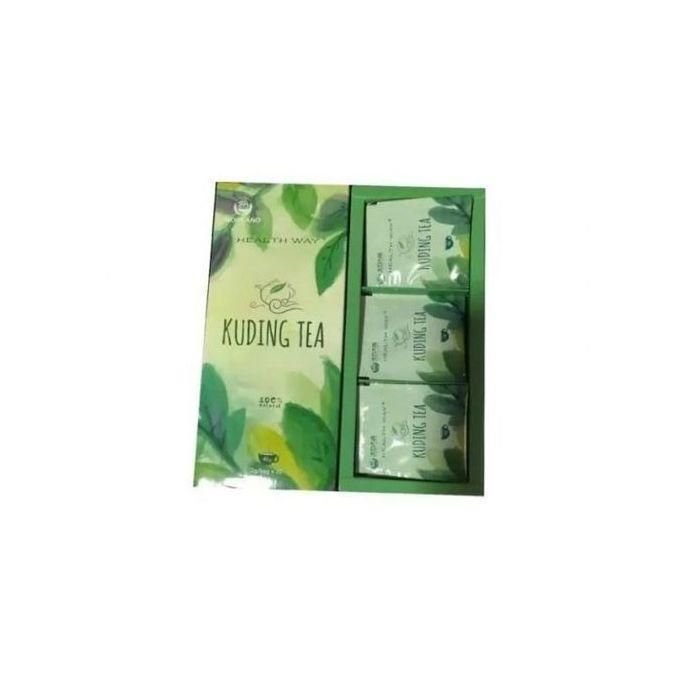
NORLAND KUDING TEA (reduces 3 Highs- Sugar, BP And Fats)2g X20pcs
This herbal tea prevents common cold and flu.it alleviates rhinitis,itching eyes,red eyes and pain in the eyes caused by wind heat.it detoxifies and improves healthy bowel movement.it improves mental focus and memory.it accelerates blood circulation,reduces blood cholesterol,blood sugar and blood pressure.it prevents deterioration of heart and brain function.it maintains proper body weight
Key Features
Improves memory
Accelerates blood circulation
Reduces blood cholesterol
Reduces blood sugar
Reduces blood pressure
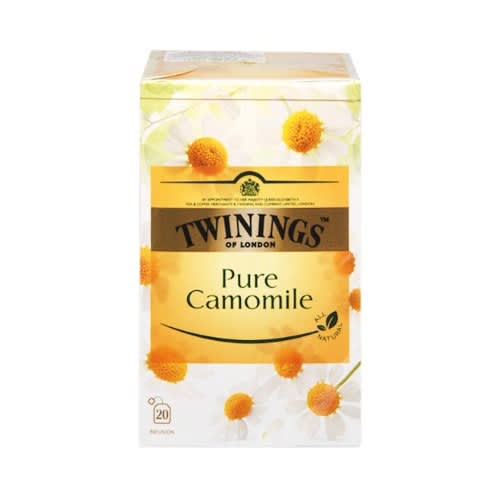
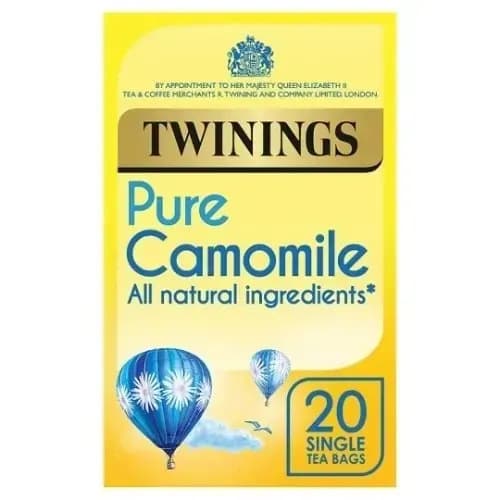
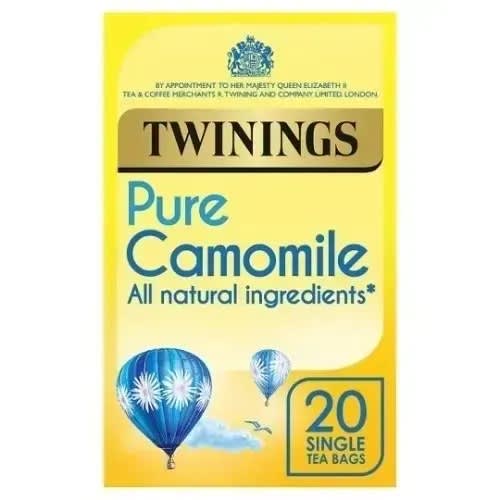
Twinings Pure Camomile Herbal Infusion Tea - 20 Tea Bags
This delicate floral infusion is traditionally used to help you relax, so sink into a deep armchair and let your worries drift away.
Made with all-natural ingredients, nothing more, nothing less. Naturally caffeine free with no added sugar.
Twinings Pure Camomile - 20 Tea Bags
Like the centre of these pretty daisy-like flowers, this is a golden infusion which is slightly sweet and floral.
A sea of white and yellow flowers dance under a brilliant blue sky. We harvest our camomile during the warm summer months, selecting the pollen heads, as they're the sweetest part. This delicate floral infusion is traditionally used to help you relax, so sink into a deep armchair and let your worries drift away.Made with all-natural ingredients, nothing more, nothing less. Naturally caffeine free with no added sugar.
Legal Disclaimer: Actual product packaging and materials may contain more and/or different information than what is displayed on our website. Therefore, we recommend that you always read labels, warnings, and directions before using or consuming a product. For additional information about a product, please contact the manufacturer or the seller. Content on rehmie.com.ng is for reference purposes and is not intended to substitute for advice given by a physician, pharmacist, or other licensed health-care professional. You should not use this information as self-diagnosis or for treating a health problem or disease. Contact your health-care provider immediately if you suspect that you have a medical problem. Information and statements regarding dietary supplements have not been evaluated by the National Agency For Food and Drug Administration and Control (NAFDAC) and are not intended to diagnose, treat, cure, or prevent any disease or health condition. rehmie.com.ng assumes no liability for inaccuracies or misstatements about products.
Herbal Origins
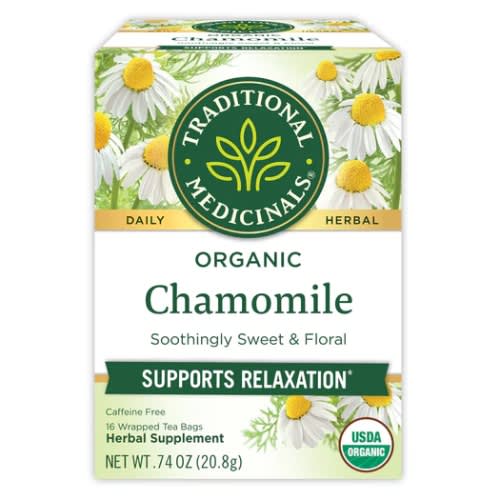
With chamomile tea benefits ranging from calming your nerves to supporting digestion, it’s no wonder chamomile is one of the most beloved plants in herbalism and a reliable household staple. To deliver the health benefits of chamomile tea, we use chamomile’s prized flowers—the most potent part of the plant due to its high essential oil content. We source some of our favorite flowers sustainably from Egypt’s fertile Nile Valley.
Ingredients
Organic chamomile flower
How to Enjoy:
Pour 8 oz. freshly boiled water over 1 tea bag.
Cover & Steep for 5-10 min.
Squeeze tea bag to ensure maximum goodness.
Enjoy 3-4 cups per day.
Legal Disclaimer: Actual product packaging and materials may contain more and/or different information than what is displayed on our website. Therefore, we recommend you always read labels, warnings, and directions before using or consuming a product. Please contact the manufacturer or seller for additional information about a product. Content on rehmie.com.ng is for reference purposes and is not intended to substitute for advice given by a physician, pharmacist, or other licensed healthcare professional. You should not use this information to self-diagnose or treat a health problem or disease. Contact your healthcare provider immediately if you suspect a medical problem. Information and statements regarding dietary supplements have not been evaluated by the National Agency For Food and Drug Administration and Control (NAFDAC) and are not intended to diagnose, treat, cure, or prevent any disease or health condition. rehmie.com.ng assumes no liability for inaccuracies or misstatements about products.
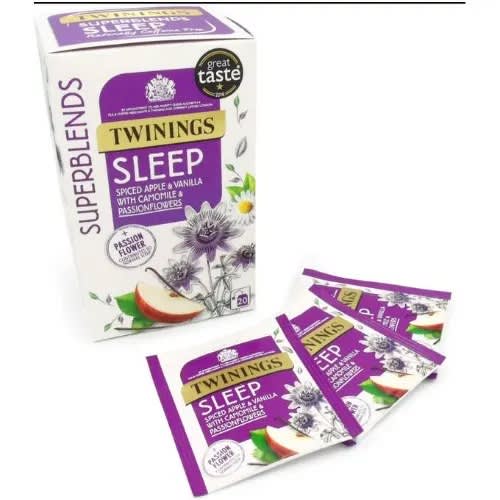
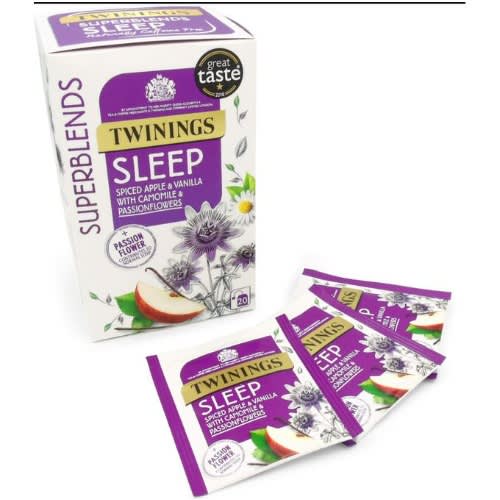
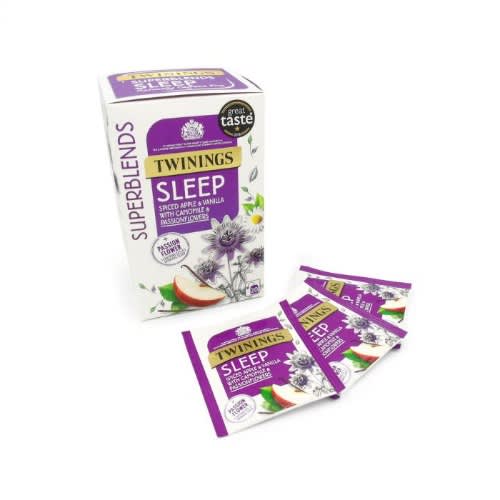
All natural ingredients**All our herbs are gently steamed, the process is gentle to protect their delicate tasteDrift off into a peaceful night's sleep while enjoying this oh-so-calming blend.We've selected the most soothing herbs from nature, traditionally used to rest your mind and body.
HEALTHWAY KUDING TEAkuding is a plant that grows in China. History has it on record that Kuding as a medical herb has been used by the Chinese for more than 2000yrs.As a folk medicine, Kuding chai is known for the following saying ‘jiang sangao’ which literally means ‘reduce three high’. This refers to the fact that this herb can help reduce high blood sugar, high blood pressure and high cholesterol.
Ingredients
Dark Tea – It can help to reduce blood pressure, reduce blood fatness, control blood sugar, etc. It helps with diuretic detoxification, anti-radiation and diminishes inflammation.
Lotus Leaf – It reduces heart, spleen, and lung fire, clears heat, refreshes the mind, promotes diuresis, and lowers blood pressure.
Big Leaf Holly - It is used for coughs, digestive disorders, water retention, cheat congestion, empties and cleanses bowels, stimulates the heart, increases urine flow, promotes blood circulation, used in treating heart disease, dizziness and high blood pressure.
Nutritional ValueKuding Tea is rich in antioxidants. It contains beneficial components such as amino acids, polyphenols, flavonoids, zinc selenium, and several vitamins such as C, D, and E.
Benefits of Kuding Tea
Losing weight and slimming.
Reduces high levels of cholesterol, blood pressure, and sugar.
Preventing cancer.
Helps fight against dizziness, tinnitus, headache, and excessive heat.
Coordinates the intestines and stomach.
Its anti-bacterial properties make it an effective herb against acne and bad breath
Note
It is not suitable for pregnant women, nursing mothers, and people sensitive to caffeine.
It should be avoided by people with low blood pressure.
It should be avoided one month before or after surgery.
Legal Disclaimer: Actual product packaging and materials may contain more and/or different information than what is displayed on our website. Therefore, we recommend that you always read labels, warnings, and directions before using or consuming a product. For additional information about a product, please contact the manufacturer or the seller. Content on rehmie.com.ng is for reference purposes and is not intended to substitute for advice given by a physician, pharmacist, or other licensed health-care professional. You should not use this information as self-diagnosis or for treating a health problem or disease. Contact your health-care provider immediately if you suspect that you have a medical problem. Information and statements regarding dietary supplements have not been evaluated by the National Agency For Food and Drug Administration and Control (NAFDAC) and are not intended to diagnose, treat, cure, or prevent any disease or health condition. rehmie.com.ng assumes no liability for inaccuracies or misstatements about products.
Like the centre of these pretty daisy-like flowers, this is a golden infusion which is slightly sweet and floral.
A sea of white and yellow flowers dance under a brilliant blue sky. We harvest our camomile during the warm summer months, selecting the pollen heads, as they're the sweetest part. This delicate floral infusion is traditionally used to help you relax, so sink into a deep armchair and let your worries drift away.Made with all-natural ingredients, nothing more, nothing less. Naturally caffeine free with no added sugar.
A relaxing herbal tea expertly blended using only 100% pure camomile blossoms to deliver a soothing tea with a soft, floral aroma and smooth taste.
The potential benefits of chamomile tea, for which there is the most evidence, include:
Reducing menstrual pain. ...
Treating diabetes and lowering blood sugar. ...
Slowing or preventing osteoporosis. ...
Reducing inflammation. ...
Cancer treatment and prevention. ...
Helping with sleep and relaxation. ...
Treating cold symptoms.
Pharmacy License Number - 019911
Brand