



Buy Arrest the Music - Fela in Nigeria
You May Also Like

Featured Products
000RENG704046
Rehmie.com.ng
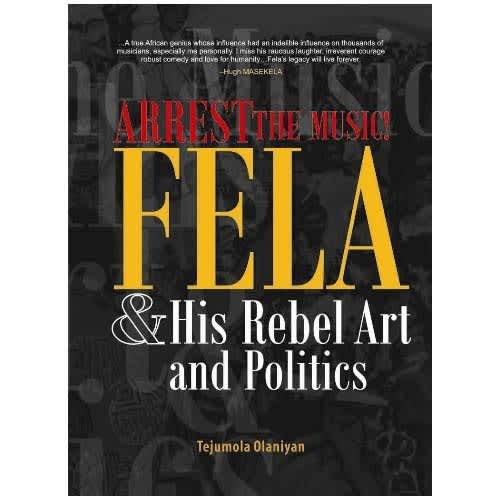
Arrest the Music - Fela
& ldquo;... The book's accessible and evocative prose is in itself a kind of homage to Fela's continual ability to seduce and astonish............................. & rdquo;
- Karin BARBER
000RENG703001
Rehmie.com.ng
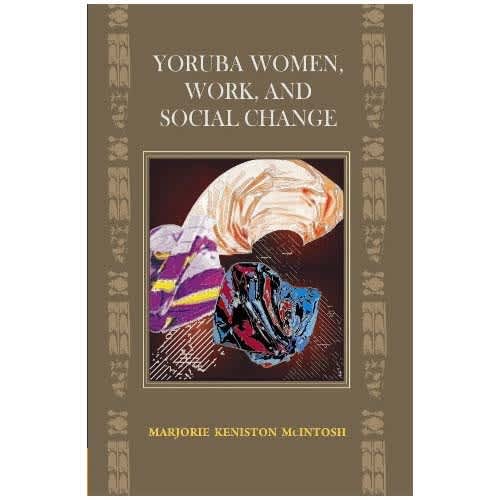
Yoruba Women, Work, And Social Change
The Yoruba, one of the largest and most historically important ethnic groups in Nigeria, are noted for the economic activity, confidence, and authority of their women. Yoruba Women, Work, and Social Change traces the history of women in Yorubaland from around 1820 to 1960 and Nigerian independence. Integrating fresh material from local court records and four decades of existing scholarship, Marjorie Keniston McIntosh shows how and why women & rsquo;s roles and status changed during the nineteenth century and the colonial era. McIntosh emphasises connections between their duties within the household, their income-generation work, and their responsibilities in religious, cultural, social, and political contexts. She highlights the forms of patriarchy found within Yorubaland and explores the impact of Christianity, colonialism, and international capitalism. This keen and insightful work offers a unique view of Yoruba women & rsquo;s initiative, adaptability, and skill at working in groups.
000RENG702839
Rehmie.com.ng
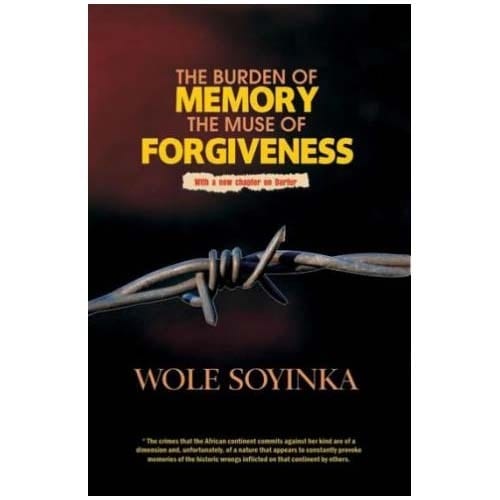
Burden of Memory
& ldquo;The nation that is Sudan belongs to two families of the world community Arab and African. These are structured, with global recognition, as the Arab League, and the Africa Union. It is depressing to observe the studied indifference of one the Arab family - to the criminality of one of its members, a nation historically placed as a cultural bridge between two races... & rdquo;
& ldquo;The African family, for its part, manifests a pathetic impotence which permits a re-enactment of a history that forged the chains of colonial bondage... & rdquo;
First published in 1999, this edition of The Burden of Memory, has been updated with a new chapter on the ongoing crises in Darfur.
000RENG700103
Rehmie.com.ng
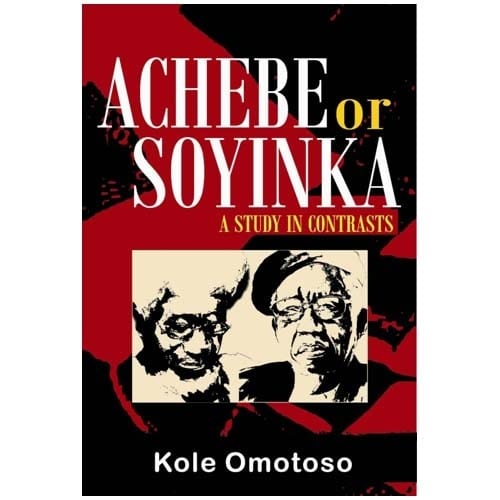
Achebe or Soyinka
The purely literary achievements are always there for all to see, read and admire, and as time goes by, to treasure and to emulate. In the case of Achebe and Soyinka, the various prizes they have won attest to their achievements. Literary criticism has concentrated on Achebe's conscious writing on his culture for the consumption of foreigners as against writing for people within his own understanding & hellip; Soyinka, on his side, has been found by many critics as being deliberately difficult and hard to comprehend.
If we were to play a game of the world that Achebe creates side by side with the world that Soyinka creates we would be seeing two different worlds & hellip;
While the successes achieved by Achebe and Soyinka have had positive communal repercussions, their greatest successes have to do with their individual achievements in their ability to write one culture (Igbo and Yoruba) in the language of another culture (English). This is the nature of the greatest writers through time and today. Salman Rushdie, Gabriel Garcia Marquez, Derek Walcott & ndash;these are the writers in whose company Chinua Achebe and Wole Soyinka exist.
000RENG685363
Rehmie.com.ng
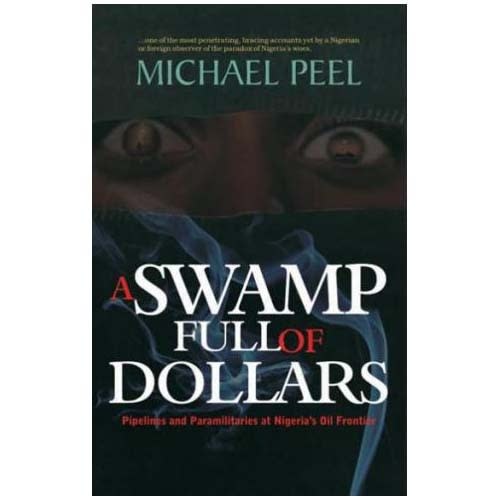
A Swamp Full of Dollars
Peel & rsquo;s book is riveting, richly detailed, thoroughly researched and written with aplomb. What emerges in the pages of A Swamp Full of Dollars is one of the most penetrating, bracing accounts yet by a Nigerian or foreign observer of the paradox of Nigeria & rsquo;s woes. Chinua Achebe has famously accused Nigeria of snatching defeat from the jaws of victory. In a narrative filled with compelling characters, captivating episodes and uncommon insights, Peel provides the devastating proof. This is a chastening book, a triumph of reportage and analysis. It deserves a wide readership, in Nigeria and elsewhere.
& ndash;Okey Ndibe
& lsquo;A compelling and well-written account. In this long-awaited book, Peel has told the history of Nigeria and oil in a way that makes this important subject accessible to all. In doing so, he has done a service to everyone who is interested in development and in Africa. & rsquo;
& ndash;Joseph E. Stiglitz,
Nobel Laureate, Economics, 2001
000RENG664982
Rehmie.com.ng
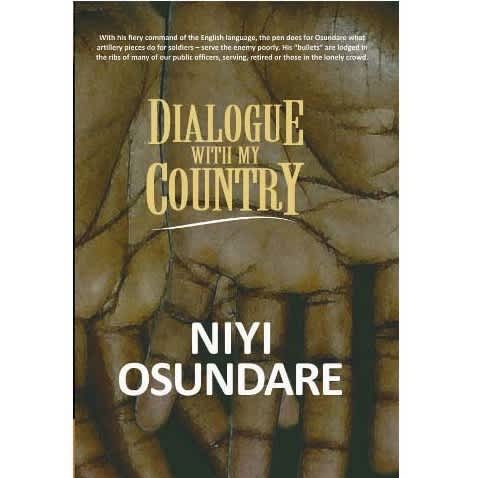
Dialogue With My Country
In the past five years Dialogue with My Country has generated a lot of responses, with a number of commentators wondering if a dialogue with a country like Nigeria is not a dialogue with the deaf. There is so much about the country & rsquo;s ostensibly incurable delinquency to justify (or, at least, excuse) this cynicism. For example, nearly all the ills excoriated in these articles over twenty years ago are still very much around: the country & rsquo;s rulers have grown more defiantly incorrigible in their infamy; the ruled more despondent in their seeming helplessness.
But our cloud has not gone without its silver lining. Nigeria is not deaf, only hard of hearing. She is not mute, but seemingly dumb from chronic disarticulation. She does sometimes listen, and she is not incapable of talking back. That grandmother we encountered earlier on in this piece is, by her remarkable act, asking us to cut through the present darkness, reinforce our pact with the future, and nurture our investment in its possibilities.
No, Nigeria is not deaf. This is why my dialogue with her in the past two and half decades is something close to an argument that never pales, something close to an endless exchange.
000RENG664128
Rehmie.com.ng
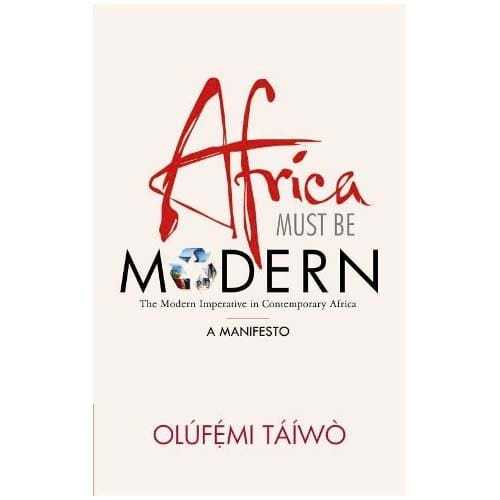
Africa Must be Modern
Africa must be modern. Put simply, Africa must embrace individualism as a principle of social ordering; make reason central in its relation to, activity upon, understanding of, and producing knowledge about the world, both physical and social, that it inhabits; and adopt progress as its motto in all things & hellip; there is no doubt that with the widespread diffusion of white supremacy in the world & rsquo;s relations with Africa, the roots of which can be traced to the slave trade and slavery as well as the peculiar form that colonialism took in Africa, it is almost required of an African intellectual that she or he be hostile to modernity and its suppositions & hellip;
much of the hostility towards modernity abroad in the continent is due to the conflicted nature of the relationship between Africans and modernity once colonialism was clamped on the continent. From then on, many Africans came to misidentify modernity with colonisation and westernisation and a plague-on-all-your-houses attitude sedimented in much of the continent towards modernity-as-colonisation-and-westernisation & hellip;.[B]being an ex-colony is no insurmountable barrier to building a modern economy and giving the old capitalist economies a good run for their money.
000RENG664127
Rehmie.com.ng
Climate of Fear
Soyinka explores the changing faces of fear; the conflict between power and freedom; the complex motives behind unthinkable acts of violence; and the meaning of human dignity.
000RENG664122
Rehmie.com.ng
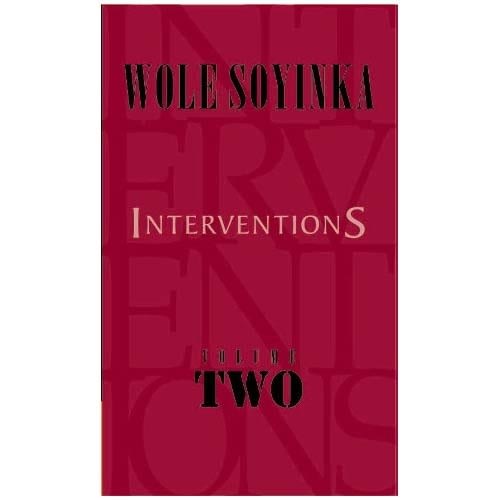
Interventions II
In five active decades of tireless and committed social engagement, no subject matter has been too controversial or taboo for Wole Soyinka, which makes his essays and articles among the most widely read.
& lsquo;The themes of the series vary literally from the sublime to the ridiculous, from national foibles to the tragic face of nation existence, from citizens derelictions and delinquencies to government criminalities and betrayals of trust, from the celebration of life and other eulogies to lamentations. & rsquo;