


Buy Mad Honey: A Novel in Nigeria
You May Also Like












Featured Products
000RENG471673
Rehmie.com.ng
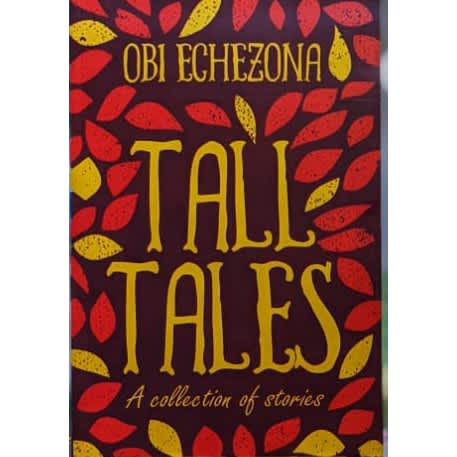
Tall Tales
A collection of fourteen short stories that touch the heart and the ribs....
Tall Tales is a collection of short stories. The stories cover a diverse spectrum of experiences with emphasis on dark humor and exaggerations.
The first three stories(Query, Jekyll and Hyde and Monthly performance review)are based on the experiences of a single character, a bank worker named Bright as he carries out his daily duties.
Electric pole details the harrowing experience of a gentleman named Ben as he goes to work one morning only to discover that he couldn't pay for his transport fare. This story highlights the bizarre ways life is lived and lost in contemporary Nigeria.
Chronic hunger is about the irony of life through the eyes of a starving 13 year old.
New Money paints a picture of a dysfunctional society that blindly lusts after wealth regardless of its source.
Child Abuse details a typical day in the life of a house girl but with a twist in the end.
Sanitation day is a satire of sorts. People have become one with filth with disastrous consequences.
In The dream, the protagonist has a vivid dream about an eccentric spinster and her mango tree.
Just a little robbery is about three boys who decide to rob a mall, only for one of them to encounter unwanted consequences.
In The lift, Crystal enters a car ride that rapidly becomes a life and death struggle
When John's car broke down in an unknown terrain, the sight of one lonely house was more than welcome. However,he soon discovers that all is not as it seems in the Half way house.
Mabel's Weight problems are detailed to show that everything bad can get worse.
Farewell Party is set in the far future, when perfection is everything and flaws are not allowed.
000RENG471679
Rehmie.com.ng
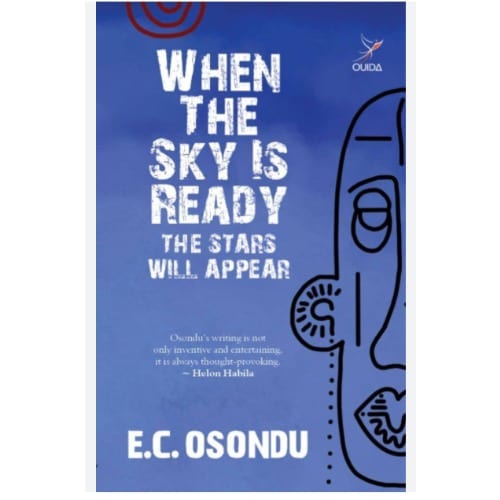
When The Sky Is Ready - The Stars Will Appear By E.c Osondu
& ldquo;When The Sky Is Ready The Stars Will Appear & rdquo; is really a story about a journey. The ambition of the unnamed narrator is jolted awake when Bros, a mysterious drifter, returns from Rome to his home town, Gulu Station, with enough gifts and wealth to (even) refurbish his father & rsquo;s house and animate the air in Gulu Station. By delivering Bros & rsquo;s Love notes to his Love interest, Miss Koi Koi, a class teacher, he inevitably gets acquainted with Bros. Few days before his departure to Rome, Bros gifts him a map with which he could use to illegally navigate his way to Rome, promising to give him a warm welcome whenever he arrives. Excited about the whole prospect of travelling to Rome and returning to Gulu Station with just as much wealth as Bros & rsquo;s, he tells his mother, Nene, about it.
000RENG471687
Rehmie.com.ng
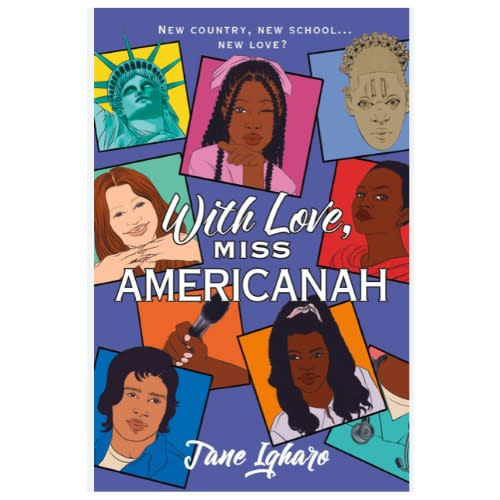
With Love Miss Americanah
With Love, Miss Americanah the Young Adult contemporary romance debut from Jane Igharo sees a teenager move from Nigeria to America and navigate her senior year with the help of classic teen movies and a new crush, all while working through grief and the rigid expectations of her mother.17 year old Enore Adesuwa doesn & rsquo;t dive into things, she walks in carefully. So when she, her mother, and her sister move from Nigeria to America shortly after her father & rsquo;s death, she wants to be extremely prepared before attending an American high school. Her cousin, Adrian, doesn & rsquo;t have time to explain the ins and outs to her but, luckily, he recommends the perfect research tool: teen movies.Still dealing with grief but armed with a set of rules of survival gathered from these movies (including the crucial rule of keeping a low profile), Enore is ready for her senior year. But when she meets Davi Santiago, it may be much harder than she thought to keep to her rules. Because not only is he super thoughtful (and okay, very good looking), he constantly encourages her to share her incredible singing talent. Enore prefers the background but it just might be time for her to take center stage, even in spite of her mother & rsquo;s strict expectations.Maybe it would be easier to follow all the rules, the ones Enore set for herself and the ones her mom imposes, but as every teen movie has taught her, a coming of age is nothing without a little rebellion. And with help from her crush, her sister, and some new friends who don & rsquo;t quite fit the roles she expects them to play, Enore & rsquo;s senior year might indeed be cinematic.
000RENG471693
Rehmie.com.ng
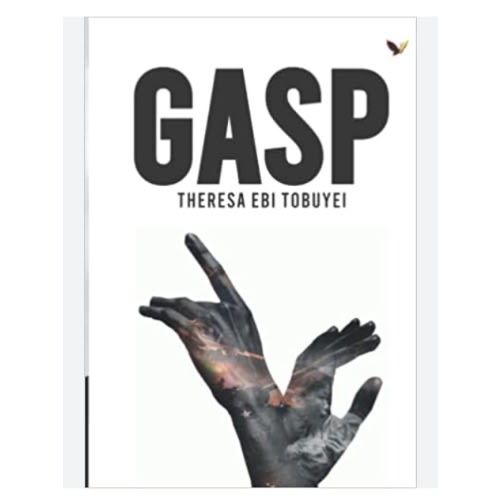
Gasp: The Aftermath Of War
A trio of teenage girls, Imabong Nyang, Tonye Femeiya and Ivie Udi, are casualties of the Warri Crisis of 1997.All three were close friends and classmates who lived in the same neighbourhood at Lower Erejuwa in Warri South Local Government Area of Delta State.Calamity struck when the crisis heightened in 1997, which took a toll on their families, with each of them losing a blood relative in the most disheartening way.They reconnect twenty-two years later, in the most awkward circumstances, each nursing the scar from the wounds the crisis inflicted on them.The story begins with the scene of Mr Femeiya & rsquo;s butcher in the presence of his only child; Tonye Femeiya at the school of the trio where he went to rescue them, the subsequent separation that occurred as a result of the killings of members of each of their families and then cascades down to Imabong Nyang, now 37, who woke up to a nightmare that recaptured her past during the crisis. That same day she reconnects with Tonye Femeiya at the hospital where she works as a neurosurgeon, and days later, she reconnects with Ivie Udi in another situation.The writing captures the trio & rsquo;s life journey from their teenage days to their present day. It shows their love lives, career and family life, detailing how each casualty was able to navigate the difficult hurdles of life while nursing the wound they each sustained from the 1997 crisis.The story tends to portray that the damages occasioned by war/violence impacts negatively on its victims and decades after its end, these victims still battle with the demons the war gifted to them.
000RENG471700
Rehmie.com.ng
Here Comes The Sun: A Novel
A New York Times Notable Book of the YearWinner of the LAMBDA Literary Award for Lesbian FictionNamed a Best Book of 2016 by NPR, Entertainment Weekly, Buzzfeed, Bustle, San Francisco Chronicle, The Root, BookRiot, Kirkus Reviews, NYLON, Amazon, WBUR's "On Point", the Barnes & Noble Review, and Amazon (Fiction & Literature)Finalist for the NYPL Young Lions Fiction Award and the Center for Fiction's First Novel PrizeSelected for the Grand Prix Litteraire of the Association of Caribbean WritersLonglisted for the ALA Over the Rainbow AwardLonglisted for the Dublin Literary Award
In this radiant, highly anticipated debut, a cast of unforgettable women battle for independence while a maelstrom of change threatens their Jamaican village.
Capturing the distinct rhythms of Jamaican life and dialect, Nicole Dennis- Benn pens a tender hymn to a world hidden among pristine beaches and the wide expanse of turquoise seas. At an opulent resort in Montego Bay, Margot hustles to send her younger sister, Thandi, to school. Taught as a girl to trade her sexuality for survival, Margot is ruthlessly determined to shield Thandi from the same fate. When plans for a new hotel threaten their village, Margot sees not only an opportunity for her own financial independence but also perhaps a chance to admit a shocking secret: her forbidden love for another woman. As they face the impending destruction of their community, each woman fighting to balance the burdens she shoulders with the freedom she craves must confront long-hidden scars. From a much-heralded new writer, Here Comes the Sun offers a dramatic glimpse into a vibrant, passionate world most outsiders see simply as paradise.

000RENG471716
Rehmie.com.ng
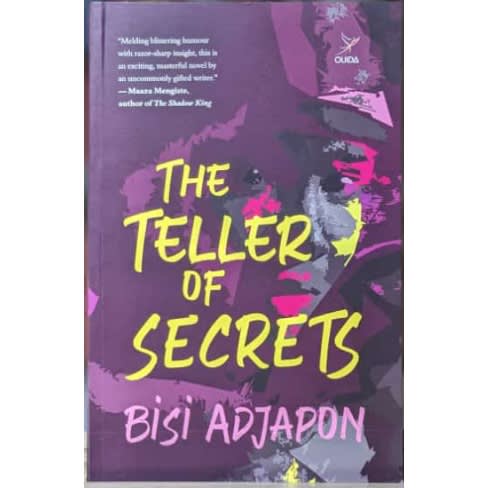
The Teller Of Secrets: A Novel
& ldquo;Bisi Adjapon writes with incredible vividness and clarity. Her similes and attention to all of the senses are really extraordinary. & rdquo; & mdash;Dave Eggers, author of The Monk of Mokha
& ldquo;Melding blistering humor with razor-sharp insight, The Teller of Secrets heralds a marvel of a writer, one capable of deftly balancing questions of sexuality, politics, and feminism in a novel that is a pure joy to read. & rdquo; & mdash;Maaza Mengiste, author of The Shadow King, Shortlisted for the 2020 Booker Prize
In this stunning debut novel & mdash;a tale of self-discovery and feminist awakening & mdash;a feisty Nigerian-Ghanaian girl growing up amid the political upheaval of late 1960s postcolonial Ghana begins to question the hypocrisy of her patriarchal society, and the restrictions and unrealistic expectations placed on women.
Young Esi Agyekum is the unofficial & ldquo;secret keeper & rdquo; of her family, as tight-lipped about her father's adultery as she is about her half-sisters & rsquo; sex lives. But after she is humiliated and punished for her own sexual exploration, Esi begins to question why women's secrets and men's secrets bear different consequences. It is the beginning of a journey of discovery that will lead her to unexpected places.
As she navigates her burgeoning womanhood, Esi tries to reconcile her own ideals and dreams with her family & rsquo;s complicated past and troubled present, as well as society & rsquo;s many double standards that limit her and other women. Against a fraught political climate, Esi fights to carve out her own identity, and learns to manifest her power in surprising and inspiring ways.
Funny, fresh, and fiercely original, The Teller of Secrets marks the American debut of one of West Africa's most exciting literary talents.
000RENG471720
Rehmie.com.ng
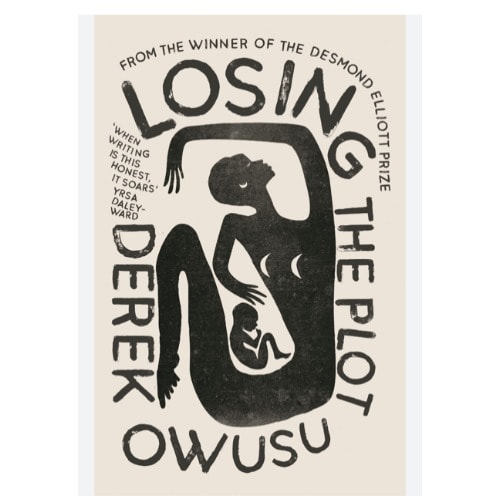
Losing The Plot
DEREK OWUSU NAMED GRANTA'S BEST OF YOUNG BRITISH NOVELISTS 2023LONGLISTED FOR THE JHALAK PRIZE 2023LONGLISTED FOR THE DYLAN THOMAS PRIZE 2023SHORTLISTED FOR PEOPLE'S BOOK PRIZE - FICTION 2023LONGLISTED FOR THE DIVERSE BOOK AWARDS 2023'A highly enigmatic, affectionate and robustly written portrayal of a mother-son relationship . . . very relatable' Diana EvansDriven by a deep-seated desire to understand his mother's life before he was born, Derek Owusu offers a powerful imagining of her journey. As she moves from Ghana to the UK and navigates parenthood in a strange and often lonely environment, the effects of her displacement are felt across generations.Told through the eyes of both mother and son, Losing the Plot is at once emotionally raw and playful as Owusu experiments with form to piece together the immigrant experience and explore how the stories we share and tell ourselves are just as vital as the ones we don't.
000RENG471727
Rehmie.com.ng
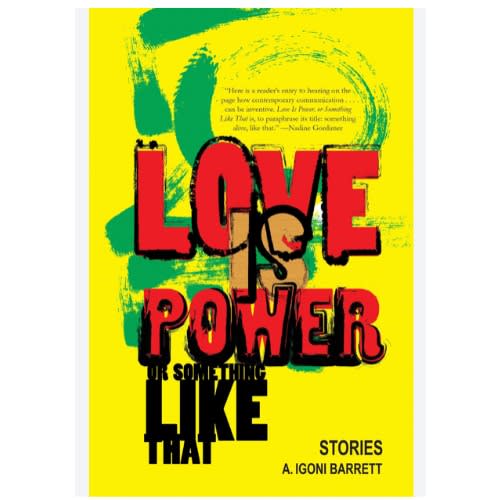
Love Is Power- Or Something Like That - Stories
Vivid, powerful stories of contemporary Nigeria, from a talented young author
* An NPR, Flavorwire, and Largehearted Boy Best Book of the Year * One of the Millions's Most Anticipated Books of 2013 *When it comes to love, things are not always what they seem. In contemporary Lagos, a young boy may pose as a woman online, and a maid may be suspected of sleeping with her employer and yet still become a young wife's confidante. Men and women can be objects of fantasy, the subject of beery soliloquies. They can be trophies or status symbols. Or they can be overwhelming in their need.In the wide-ranging stories in Love Is Power, or Something Like That, A. Igoni Barrett roams the streets with people from all stations of life. A man with acute halitosis navigates the chaos of the Lagos bus system. A minor policeman, full of the authority and corruption of his uniform, beats his wife. A family's fortunes fall from love and wealth to infidelity and poverty as poor choices unfurl over three generations. With humor and tenderness, Barrett introduces us to an utterly modern Nigeria, where desire is a means to an end, and love is a power as real as money.
000RENG471763
Rehmie.com.ng
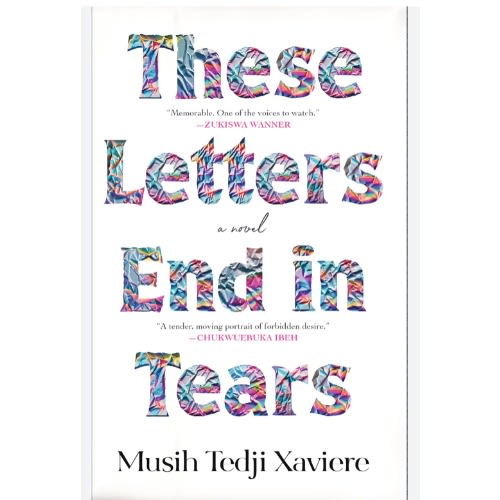
These Letters End In Tears: A Novel
Set in a country where being gay is punishable by law, These Letters End in Tears is the heart-wrenching forbidden love story of a Christian girl with a rebellious heart and a Muslim girl leading a double lifeBessem notices Fatima for the first time on the soccer field & mdash;muscular and focused, she & rsquo;s the only woman playing and seems completely at ease. When Fatima chases a rogue ball in her direction, Bessem freezes, mesmerized by the athlete & rsquo;s charm and beauty. One playful wink from Fatima, and Bessem knows her life will never be the same.In Cameroon, a country where same-sex relationships are punishable by law, the odds are stacked against Bessem and Fatima from the start. And when Fatima & rsquo;s older brother, a staunch Muslim, finds out about their affair, he intervenes by physically assaulting them, an incident that precedes a police raid at the only gay bar in town. After spending days in jail, Fatima goes missing without a trace, and Bessem is left with only rumors of her whereabouts. Has Fatima been sentenced to an unknown prison? Has she been banished from her community, or married off, as some have suggested? Or something even more sinister?Thirteen years later, Bessem is now a university professor leading a relatively quiet life, occasionally and secretly dating other women. However, she has never forgotten Fatima. After spotting a mutual friend for the first time in years & mdash;the last person who may have seen Fatima & mdash;Bessem embarks on a winding search for her lost love.
000RENG471771
Rehmie.com.ng
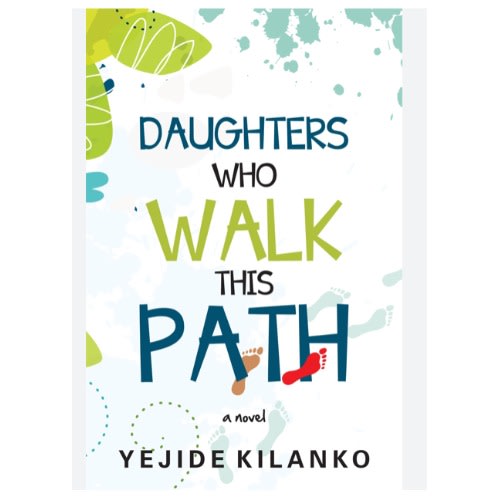
Daughters Who Walk This Path
SPIRITED AND INTELLIGENT, MORAYO grows up surrounded by school friends and family in busy, modern-day Ibadan. An adoring little sister, their traditional parents, and a host of aunties and cousins make Morayo & rsquo;s home their own. So there & rsquo;s nothing unusual about her charming but troubled cousin Bros T moving in with the family. At first Morayo and her sister are delighted, but in her innocence, nothing prepares Morayo for the shameful secret Bros T forces upon her.Thrust into a web of oppressive silence woven by the adults around her, Morayo must learn to protect herself and her sister from a legacy of silence shared by the women in her family. Only her Aunt Morenike provides Morayo with a safe home and a sense of female community that sustains her as she develops into a young woman in bustling, politically charged, often violent Nigeria.
000RENG471774
Rehmie.com.ng
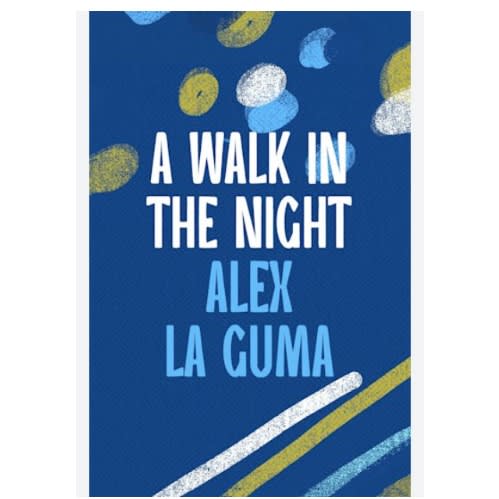
A Walk In The Night
In the title story, in a Cape Town shantytown called District Six in the 1960s, Michael Adonis has lost his job at a metal sheet factory after an argument with a white supervisor. Illuminating the toxic effects of poverty, police brutality, and violence, the book paints a stark and unforgettable portrait of Adonis's emotional and physical destruction in apartheid South Africa. These works reveal the plight of non-whites in apartheid South Africa, laying bare the lives of the poor and the outcasts who filled the ghettoes and shantytowns. Of French and Malagasy stock, involved in South African politics from an early age, Alex La Guma was arrested for treason with 155 others in 1956 and finally acquitted in 1960. During the State of Emergency following the Sharpeville massacre he was detained for five months. Continuing to write, he endured house arrest and solitary confinement. La Guma left South Africa as a refugee in 1966 and lived in exile in London and Havana. He died in 1986. A Walk in the Night and Other Stories reveals La Guma as one of the most important African writers of his time.
000RENG471777
Rehmie.com.ng
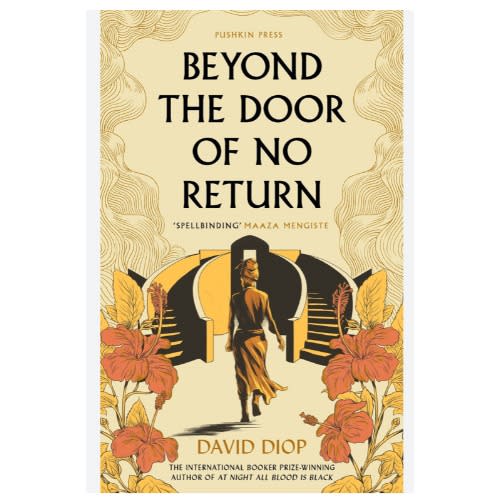
Beyond The Door Of No Return: A Novel
One of The Atlantic & rsquo;s 10 Best Books of 2023A Financial Times Best Book of 2023 | Named a best book of the year by Publishers Weekly and Kirkus Reviews & ldquo;A hypnotic, powerful historical novel in which stories nest within one another like dolls . . . It all coheres mesmerizingly. & rdquo; Cl & eacute;mence Michallon, The New York Times Book Review & ldquo;Stunningly realized . . . Exquisite . . . A spellbinding novel. & rdquo; Maaza Mengiste, author of The Shadow KingThe thrilling and deeply moving new novel by David Diop, winner of the International Booker Prize.Paris, 1806. The renowned botanist Michel Adanson lies on his deathbed, the masterwork to which he dedicated his life still incomplete. As he expires, the last word to escape his lips is a woman & rsquo;s name: Maram.The key to this mysterious woman & rsquo;s identity is Adanson & rsquo;s unpublished memoir of the years he spent in Senegal, concealed in a secret compartment in a chest of drawers. Therein lies a story as fantastical as it is tragic: Maram, it turns out, is none other than the fabled revenant. A young woman of noble birth from the kingdom of Waalo, Maram was sold into slavery but managed to escape from the Island of Gor & eacute;e a major embarkation point of the transatlantic slave trade to a small village hidden in the forest. While on a research expedition in West Africa as a young man, Adanson hears the story of the revenant and becomes obsessed with finding her. Accompanied by his guide, he ventures deep into the Senegalese bush on a journey that reveals not only the savagery of the French colonial occupation but also the unlikely transports of the human heart.Written with sensitivity and narrative flair, David Diop & rsquo;s Beyond the Door of No Return is a love story like few others. Drawing on the richness and lyricism of Senegal & rsquo;s oral traditions, Diop has constructed a historical epic of the highest order.